
Filipino Pork Adobo is one of those dishes that always impresses me. I grew up enjoying this with warm white rice and a side of sliced tomatoes. The simplicity of its ingredients, combined with deep flavors, is what makes adobo a timeless favorite. Let me show you how to make this classic dish the way I’ve always cooked it at home.
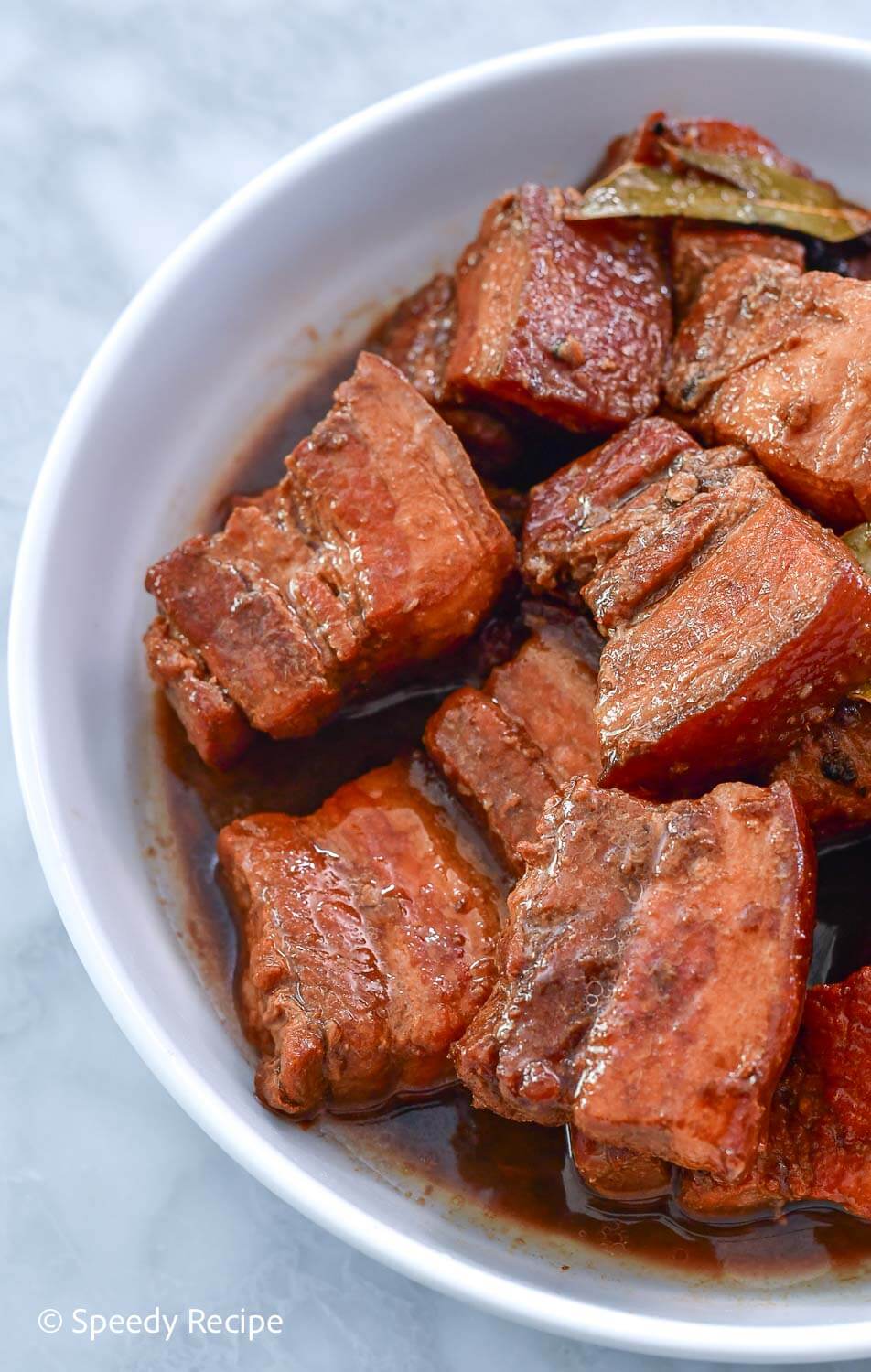
What is Filipino Pork Adobo?
Filipino Pork Adobo is a vinegar and soy sauce–based stew braised with garlic, peppercorn, and bay leaves. The pork is simmered until tender and flavorful, creating a savory-sour sauce that pairs perfectly with steamed rice. Adobo is one of the most recognized Filipino dishes and has many regional variations, but pork adobo remains a staple in many households across the Philippines.
Ingredients for Filipino Pork Adobo
- Pork belly – This cut has the right balance of fat and meat, making the adobo rich and flavorful.
- Soy sauce – Adds savory depth and that signature umami flavor.
- Vinegar – Brings the tangy contrast that balances the richness of the pork.
- Garlic – Lots of it! Crushed cloves infuse the dish with a bold aroma and flavor.
- Bay leaves – Adds an earthy, slightly floral note that complements the vinegar.
- Whole peppercorn – Gives a mild spice and warmth to the stew.
- Water – Helps create the braising liquid that reduces into the sauce.
- Brown sugar – A small amount adds subtle sweetness and rounds out the acidity.
- Cooking oil – Used for sautéing the garlic and browning the pork.

How to Cook Filipino Pork Adobo
- Start with a Flavor Base
Heat oil in a pot. Add crushed garlic and sauté until lightly browned and aromatic. - Brown the Pork
Add the pork belly pieces. Cook until all sides are lightly browned and some fat has rendered. - Add Seasoning and Liquids
Pour in the soy sauce, vinegar, and water. Stir in whole peppercorn, bay leaves, and a bit of brown sugar. Do not stir immediately after adding vinegar—let it boil first. - Simmer and Tenderize
Cover and simmer over low heat for 45 minutes to 1 hour or until the pork becomes tender. Stir occasionally and adjust the heat as needed. - Reduce and Thicken the Sauce
Uncover the pot and let the sauce reduce until slightly thick and coats the pork well. - Taste and Adjust
Taste the sauce and adjust with more soy sauce or vinegar if needed. Serve hot with steamed rice.
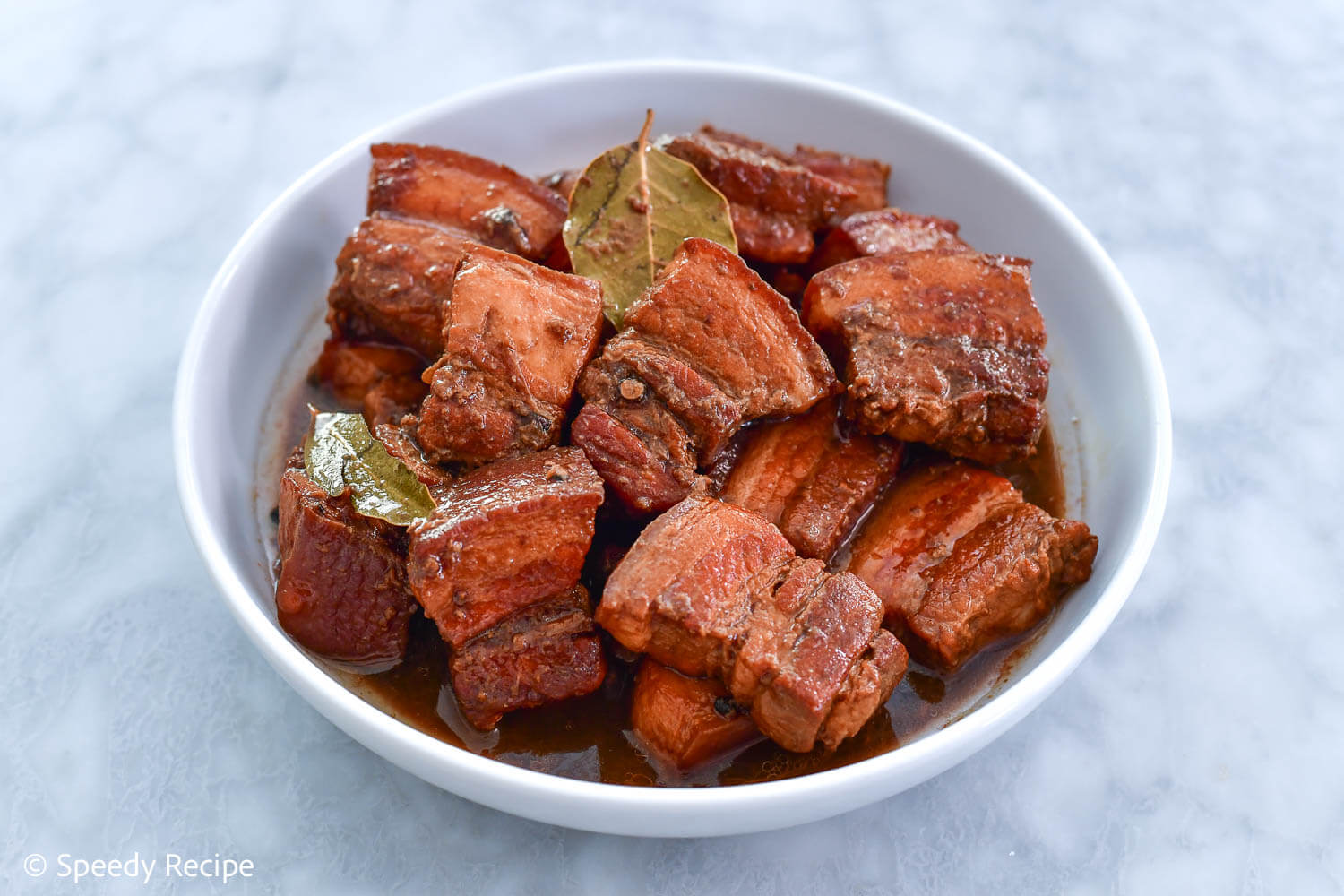
Best Ways to Enjoy Filipino Pork Adobo
Adobo is best served over freshly cooked white rice. If you have leftovers, try flaking the pork and turning it into Adobo Fried Rice. You can also pair it with salted eggs and tomatoes for a complete Filipino breakfast. Some even love adobo better the next day, as the flavors continue to develop overnight.
Tips in Cooking Filipino Pork Adobo
- Do not stir right after adding vinegar – Let it boil first to cook off the sharpness.
- Use a mix of cuts if desired – You can combine pork belly with pork shoulder for more texture.
- Store leftovers properly – Adobo actually tastes better the next day. Store in an airtight container and reheat gently.
- Adjust the sweetness – Add more or less sugar based on your preference.
- Make it spicy – You can toss in a few chili peppers if you like some heat.
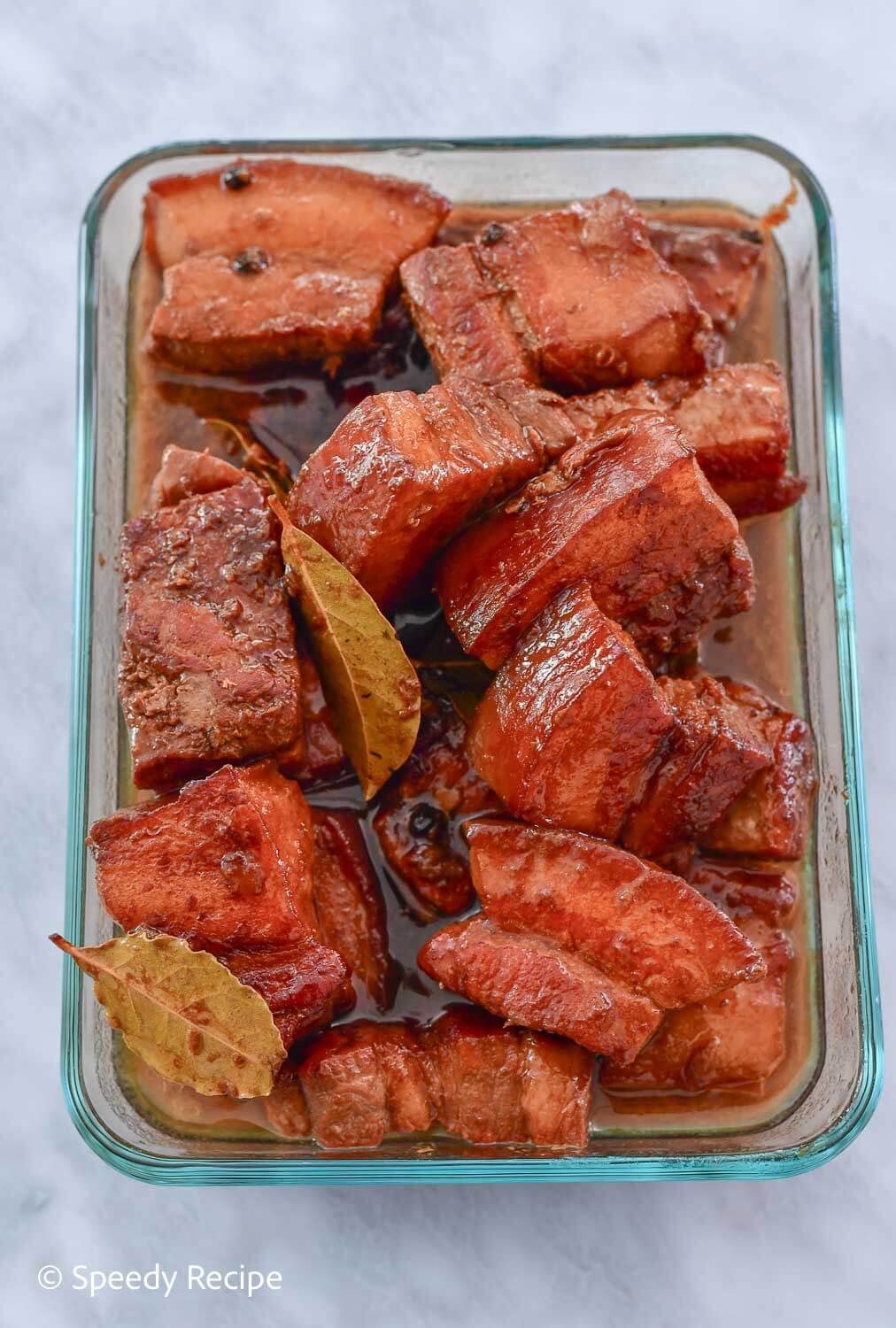
What Makes This Pork Adobo Stand Out
This version uses the classic soy sauce and vinegar base without overwhelming extras. It’s the balance of salty, sour, and sweet—plus the rendered fat from pork belly—that gives it a bold yet comforting flavor. Browning the pork also adds richness and deeper umami to the dish.
What to Have with It
- Egg Fried Rice – A savory side that soaks up every drop of adobo sauce.
- Ensaladang Talong – Grilled eggplant salad that brings freshness and contrast.
- Itlog na Maalat with Kamatis – Salted egg and tomato salad pairs perfectly with the bold flavors of adobo.
- Lumpia – Adds a nice crunch and texture contrast.
- Flan Cake – End the meal with a creamy sweet dessert that balances the savory main dish.
- Ginisang Munggo – a flavorful side for adobo dishes.
Frequently Asked Questions
Can I use other cuts of pork aside from belly?
Yes, pork shoulder (kasim) is a good alternative. It has less fat but still stays tender when simmered.
Is it okay to use sugar in adobo?
Sugar is optional but helps round out the flavor. You can skip it or adjust the amount to your taste.
Can I cook adobo in a pressure cooker?
Yes. It significantly cuts the cooking time. Pressure-cook the pork for about 15 to 20 minutes after adding all ingredients.
How long does pork adobo last in the fridge?
Properly stored, it can last 3 to 5 days. Reheat only the portion you plan to eat.
Can I freeze pork adobo?
Definitely. Freeze in portions for easier reheating. It keeps well for up to a month.
If you haven’t cooked pork adobo before, now’s the time. This one’s easy, packed with flavor, and definitely something you’ll want to make again. Try it out and enjoy it with lots of rice. Let me know how it turns out!
Pork Adobo Recipe
Ingredients
- 2 lbs pork belly, cut into chunks
- ½ cup soy sauce
- ½ cup vinegar
- 1 head garlic, crushed
- 3 pieces dried bay leaves
- 1 teaspoon whole peppercorn
- 1 tablespoon brown sugar
- 1 cup water
- 2 tablespoons cooking oil
Instructions
- Heat oil in a pot. Add crushed garlic and sauté over medium heat until fragrant and lightly golden.2 tablespoons cooking oil, 1 head garlic
- Add pork belly. Cook while stirring until the outer part turns light brown and some fat renders out.2 lbs pork belly
- Pour in soy sauce, vinegar, and water. Add whole peppercorn, bay leaves, and brown sugar. Let the mixture boil without stirring for about 2 minutes to mellow out the vinegar.½ cup soy sauce, 3 pieces dried bay leaves, 1 teaspoon whole peppercorn, 1 tablespoon brown sugar, 1 cup water, ½ cup vinegar
- Stir gently, cover the pot, and simmer on low heat for 45 to 60 minutes or until the pork is tender. Stir occasionally and adjust the heat to maintain a gentle simmer.
- Once the pork is tender, uncover and continue simmering until the sauce reduces and thickens to your desired consistency.
- Taste and adjust seasoning if needed. Serve hot with steamed white rice.




Leave a Reply