
Let this leafy dish turn plain greens into a zesty highlight! Adobong kangkong (water spinach) has gained wide appeal in the Philippines and beyond as a quick side dish packed with bright, tangy flavor. Many Filipino prepare this because it’s speedy and really is close to Filipino taste, praising how garlic, vinegar, and soy coat the leafy greens.
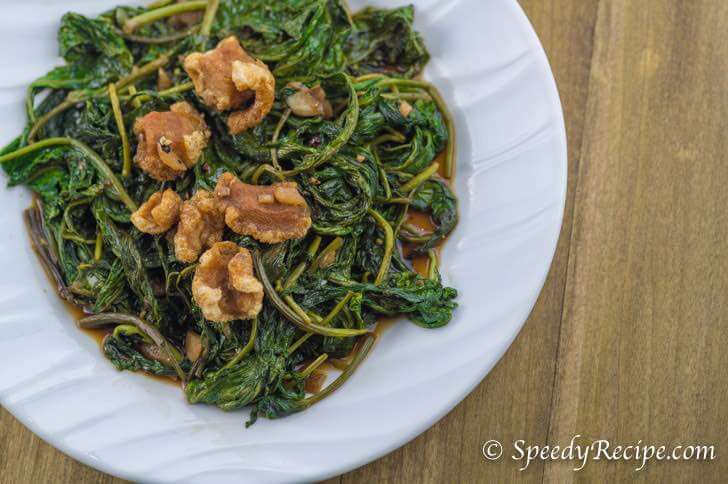
I enjoy this version for its fast prep time, I can have it ready while rice cooks. I also pair it with fried fish or grilled meats, such as fried milkfish or patis fried chicken. The leafy kangkong absorbs the sauce quickly, making it perfect for busy weeknight meals. Since I name my blog Speedy Recipe, speed matters, and this one delivers in under 10 minutes from pan to plate!
What is Adobong Kangkong?
Adobong kangkong is a Filipino vegetable dish where water spinach is quickly cooked in soy sauce, vinegar, garlic, and cracked pepper. The word adobo comes from the Spanish word adobar, meaning “to marinate,” but the Filipino version has evolved far beyond that. Instead of using it to preserve, the sauce is now a base for fast stovetop braising.
This version using kangkong shows up in many homes across the Philippines because the greens are affordable, grow fast in wet areas, and soak up flavor well. Some regions have fun spins on it too. In the Visayas, a version called apan-apan throws in fried pork or shrimp paste. Others stir in coconut milk or a dash of sugar. These variations show how adaptable this dish can be while still honoring that soy-vinegar backbone. It stays fast, punchy, and perfect for a quick pan-fry when time is tight.
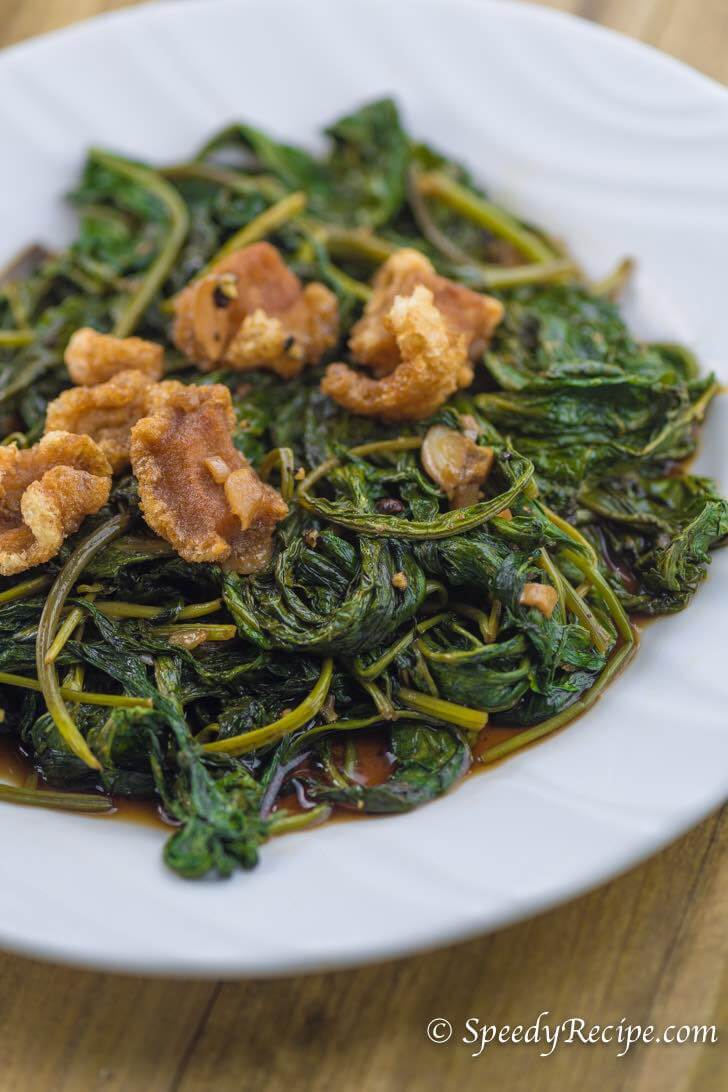
Ingredients of Adobong Kangkong
Main Ingredient
- Kangkong (1/2 lb) – I use young kangkong leaves with thin stems. They cook quickly and absorb sauce well without turning mushy.
- Fried pork rinds or chicharon (2 ounces) – I use half during cooking and save the rest for topping. This adds crunch and a salty contrast that ties the dish together.
For the Sauce
- Soy sauce (4 1/2 tablespoons) – This is the base of the adobo flavor. I stick to regular soy sauce, not light or sweet, to keep it sharp and clean.
- White vinegar (2 tablespoons) – Adds that signature tang. Don’t stir after pouring. Let it simmer and settle to avoid overpowering sourness.
- Water (3 to 4 tablespoons) – This thins out the sauce slightly so the kangkong cooks evenly without getting greasy.
- Granulated white sugar (1/2 teaspoon) – A small pinch balances the sharp edge of vinegar and soy. I don’t go overboard since the chicharon already has salt.
Aromatics and Seasoning
- Garlic (6 cloves, chopped) – I chop it fine and let it toast until golden before anything else goes in. That quick browning gives off a deep base note.
- Cracked peppercorn (1/4 teaspoon) – Adds a peppery bite that cuts through the vinegar and sharp soy.
- Cooking oil (3 tablespoons) – Just enough to toast the garlic and coat the kangkong. I go with neutral oil so it doesn’t overpower the aromatics.
What You’ll Notice in Speedy Recipe’s Adobong Kangkong
Compared to many home versions floating around, mine skips the long simmer and heavy seasoning. A lot of other takes tend to throw in oyster sauce or too much sugar, but I hold back. That keeps the sauce sharp and light, which works better when the main ingredient is a leafy green instead of meat. I also don’t let the kangkong sit in the pan too long, it only needs a short cook time before turning limp.
Where this version stands out is with the chicharon. Instead of just tossing it on top, I mix in half during cooking. That softens some pieces just enough to absorb the sauce, while the rest stay crispy as a topping. This contrast is something I’ve leaned into over the years, especially after trying different takes that felt one-note or flat.
Traditional adobong kangkong recipes often keep things meatless or use tulapho, which are fried pork bits similar to crispy adobo flakes. While those versions are solid, they usually take more prep. That’s why I stick with pork rinds, no slicing or frying needed, and they still punch in that savory boost. I also go easier on the sauce volume compared to older styles where the greens are half-floating. Here, it clings to the stems, not drowns them.
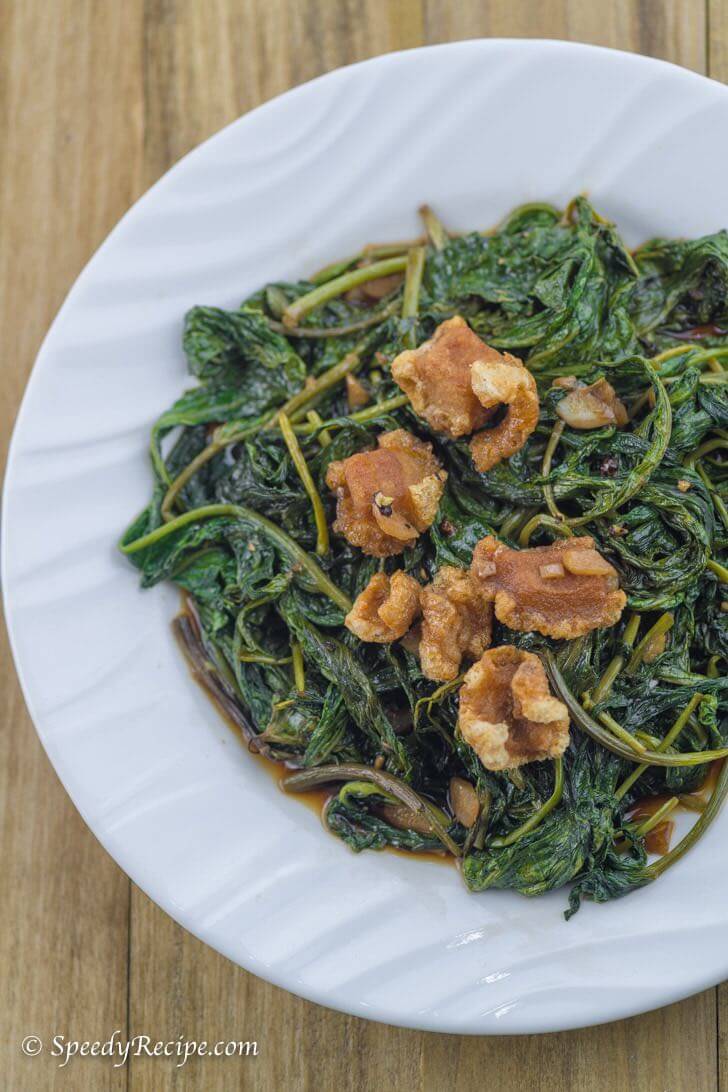
How to Cook Adobong Kangkong
- Start with the aromatics – Heat 3 tablespoons of cooking oil in a pan over medium heat. Add 6 chopped garlic cloves and stir constantly until golden. Sprinkle in 1/4 teaspoon of cracked peppercorn and cook for another 30 seconds. This quick step sets the flavor foundation before the sauce goes in.
- Build the sauce – Pour in 4 1/2 tablespoons of soy sauce, 2 tablespoons of white vinegar, and 3 to 4 tablespoons of water. Let the liquid come to a boil without stirring, this keeps the vinegar sharp instead of mellow. Once boiling, sprinkle in 1/2 teaspoon of sugar and give it one quick stir. Keep the heat steady to avoid reducing the sauce too early.
- Add the greens – Drop in 1/2 lb of kangkong, including the tender stems. Toss gently to coat the greens in sauce. Add half of the pork rinds at this point to let them soften and soak in flavor. Cover the pan and let everything cook together for 2 to 3 minutes on low to medium heat.
- Finish and plate – Once the kangkong has wilted but still holds its shape, take off the lid. Give the pan a quick stir to catch any garlic stuck to the sides. Transfer everything to a serving plate while it’s still hot. Top with the rest of the pork rinds for that crunch.
- Serve while fresh – Adobong kangkong is best enjoyed immediately. The pork rinds stay crisp, and the greens won’t turn soggy. Pair it up while the garlic and vinegar aroma is still warm. If you plan to eat it later, skip the final topping until just before serving.
What to Have with Adobong Kangkong
Adobong kangkong always hits best for me when served with hot white rice. The sauce clings to each grain, and the mix of vinegary greens and pork crunch rounds it out. I often enjoy it this way at lunch when I need something fast and satisfying without feeling heavy.
In the Philippines, it’s usually part of a bigger spread. One classic pairing is grilled tilapia, its smoky char goes well with the sharp bite of the adobo sauce. But I have another version that works well, my oven baked blackened tilapia, which is as delicious! Another is lechon kawali, which echoes the chicharon but gives a thicker, juicier contrast. And if you’re going meat-free, a side of salted duck egg with sliced tomatoes balances the sour notes and freshens the plate. These combos are common at home meals and quick roadside eateries, proving how well adobong kangkong slides into almost any table.
More Ways to Cook Kangkong
If you enjoy adobong kangkong, you’ll find plenty of ways to use this fast-cooking green in other dishes too. Its mild taste and thin stems make it perfect for absorbing sauces quickly.
One easy option is kangkong with oyster sauce, just stir-fry the greens with garlic, then toss in a simple mix of oyster sauce and a bit of water. It’s even faster than adobo and often used as a quick side dish for fried fish or lechon kawali. Another version is apan-apan, which is Visayan-style adobong kangkong that uses crispy pork bits instead of chicharon. It leans a little stronger into the vinegar, giving it a sharper edge. There’s also a variation where kangkong is stir-fried with squid balls. That version adds a slight sweetness and makes a good one-pan dish for quick lunches.
These all build on the same idea: fast, hearty greens that don’t need much fuss. Once you start cooking with kangkong, it becomes a go-to for rounding out any meal in a few minutes.
Adobong Kangkong (Water Spinach Adobo)
Ingredients
- 1/2 lb. kangkong leaves with thin stems
- 2 ounces fried pork rinds, chicharon
- 4 1/2 tablespoons soy sauce
- 2 tablespoons white vinegar
- 3 to 4 tablespoons water
- 1/2 teaspoon granulated white sugar
- 6 cloves garlic, chopped
- 1/4 teaspoon cracked peppercorn
- 3 tablespoons cooking oil
Instructions
- Heat oil in a cooking pot.3 tablespoons cooking oil
- Add the garlic. Cook until light brown.6 cloves garlic
- Add the cracked peppercorn. Cook for 30 seconds.1/4 teaspoon cracked peppercorn
- Pour soy sauce, water, and vinegar. Let boil.4 1/2 tablespoons soy sauce, 3 to 4 tablespoons water, 2 tablespoons white vinegar
- Add the sugar, stir.1/2 teaspoon granulated white sugar
- Put the water spinach leaves (kangkong) and half of the pork rinds into the pot.Stir. Cover the pot and contiue to cook in low to medium heat for 2 to 3 minutes.3 to 4 tablespoons water, 1/2 lb. kangkong leaves with thin stems
- Tranfer to a serving plate. Top with remaining fried pork rinds (chicharon).2 ounces fried pork rinds
Recipe Notes
- Choose the right part of the kangkong. Use the top half of the stems along with the leaves. These thinner stalks cook through quickly and absorb sauce without turning stringy. Thicker stems near the root are tougher and need longer cooking, which doesn’t suit this short recipe.
- Don’t stir the vinegar right away. Once you add vinegar to the pan, allow it to boil without mixing for at least 20–30 seconds. Stirring too early interrupts its natural reduction and leaves a sharp, raw acid taste that lingers in the dish.
- Control the chicharon for texture. Add only half of the chicharon during cooking to let it soak and soften slightly. The rest should go on top after plating so it stays crisp. If you mix all at once, you lose contrast between soft greens and crunchy topping.
- Watch the cook time closely. Kangkong wilts in minutes. Overcooking leads to soggy, lifeless greens that won’t hold their shape. Cover the pot briefly to steam, then remove the lid to stop further softening from residual heat.




Leave a Reply