
Sinuglaw is a household name in many parts of Mindanao, especially around Davao and General Santos. It’s a favorite “pulutan” (food eaten during drinking sessions) and also shows up during weekend lunches when someone’s fired up the grill. Most locals enjoy it straight from the fridge, served cold, with hot rice or ice-cold beer on the side.
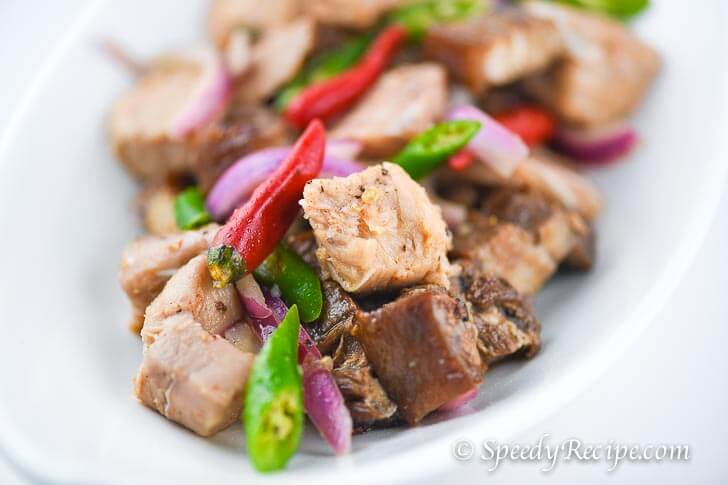
I like how fast this dish comes together, especially when I already have leftover grilled liempo. Tuna is easy to cube and quick to marinate, so I often throw this together when I want something refreshing but satisfying. It’s also nice with boiled saba bananas or grilled eggplant, depending on the mood.
What I appreciate most about this version is that it keeps the acid level punchy but not overpowering, and it gives the pork belly a chance to hold its own. The proportions are more mellow than some traditional renditions, which can sometimes lean too sharply into the vinegar. The pork has just the right char, and the tuna isn’t drowned in liquid.
What is Sinuglaw?
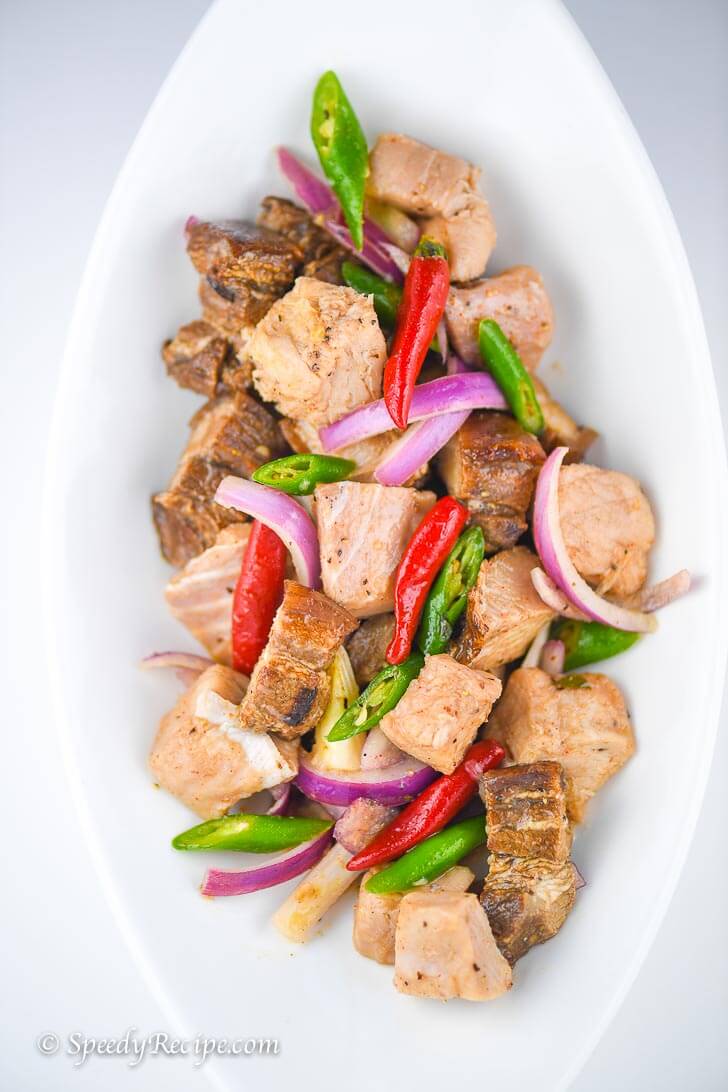
Sinuglaw is a portmanteau of two cooking methods: sinugba (grilled) and kinilaw (raw fish marinated in vinegar or citrus juice). It’s basically grilled pork belly tossed with tuna ceviche. The name captures the dish perfectly, it’s a mash-up of two well-loved styles in Filipino cooking.
It’s especially well-known in coastal parts of Mindanao where fresh tuna is always available. The vinegar “cooks” the tuna, which is true to an extent, but it doesn’t fully replace heat-based cooking. That’s why it’s key to use sushi-grade tuna or as fresh as possible.
There are also a few unwritten rules. For one, you never use yellowfin tuna with sinew. You want the soft, fatty part closest to the belly. Another thing is the vinegar, you’ll hear arguments over whether white, cane, or coconut vinegar is better. But among Dabawenyos (people in Davao), the go-to combo is usually citrus plus cane vinegar.
Ingredients of Sinuglaw
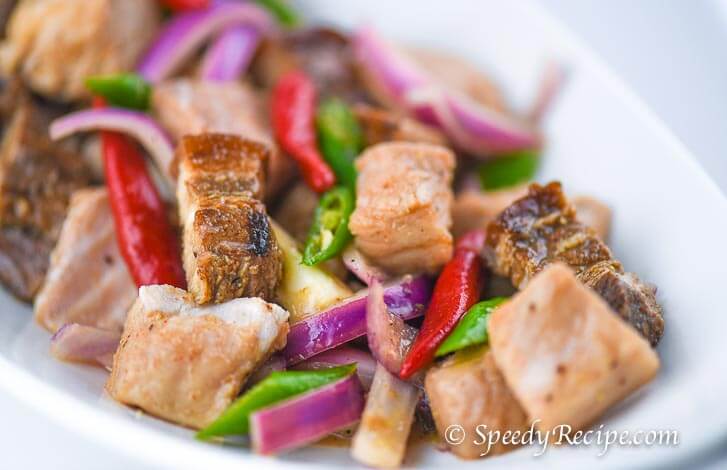
- Fresh tuna steak (6 ounces) – This is the foundation of the kinilaw part. Use sashimi-grade tuna or freshly caught yellowfin for the cleanest taste and firm cuts that hold their shape in citrus.
- Grilled pork belly, chopped (1/2 lb.) – This is where the smoky richness comes in. I go for liempo with a good mix of charred edges and fat, it makes every bite count.
- Green chili pepper, chopped (2 pieces) – These give off a milder heat that blends easily into the dish. Slice them thin and remove the seeds if you want less sting.
- Red chili pepper (6 pieces) – These are much hotter than the green ones. I usually crush them a bit before tossing them in so the spice spreads evenly into the marinade.
- Lemon juice (from 2 lemons) – Lemon works to cure the tuna gently while giving a clean, tangy taste. If lemons aren’t available, calamansi or lime can do the trick.
- White or cane vinegar (2 tablespoons) – Vinegar sharpens the citrus and gives that familiar edge. Cane vinegar is traditional, but white vinegar works if it’s what you have.
- Red onion, sliced (1 medium) – Adds crunch and a touch of sweetness. I soak it in cold water first to tone down its bite without losing flavor.
- Powdered ginger (1/4 teaspoon) – This adds warmth without making the dish spicy. You can use a pinch of grated fresh ginger instead, but go light.
- Sugar (1/2 teaspoon) – It doesn’t sweeten the dish, it just cuts through the sourness and helps round out the flavor.
- Salt (1/2 teaspoon) – Helps with curing the tuna and brings out the flavor of both meats. Make sure to stir well so it dissolves evenly.
- Ground black pepper (1/4 teaspoon) – Just enough to add a little kick. I prefer to use it lightly in the beginning, then adjust later if needed.
What You’ll Notice in Speedy Recipe’s Sinuglaw
Some versions out there lean too hard on the acidity. That much vinegar or citrus can toughen up the tuna and mute the flavor of the pork. In this version, the mix stays on the mild side while still keeping the edge that defines sinuglaw.
The grilled pork belly here doesn’t get buried, it stands out with its smoky taste and holds up even after mixing. I also skip extras like soy sauce, coconut cream, or overuse of aromatics.
I’ve also noticed that in some provinces, they dice the pork very small so it almost mimics chicharon in size. That’s not how we do it here. I like chunkier cuts. It makes the pork stand out. Now that you’ve got a better picture of what sinuglaw is, let’s look at what actually goes in it.
How to Make Sinuglaw
- Start with the marinade – In a clean bowl, mix the juice from 2 lemons with 2 tablespoons of cane or white vinegar. Stir in 1/4 teaspoon powdered ginger, 1/2 teaspoon sugar, 1/2 teaspoon salt, and 1/4 teaspoon ground black pepper. Keep stirring until everything dissolves evenly. This will be the curing base for the tuna.
- Add the tuna – Drop in the 6 ounces of cubed fresh tuna. Make sure each piece is coated well in the marinade. Cover the bowl and refrigerate for at least 30 minutes. If you have more time, you can let it rest up to an hour for deeper curing.
- Slice your aromatics – While the tuna is marinating, prep 1 medium red onion by slicing it thin. I like to soak the slices in cold water for a few minutes to remove the harshness. Also chop 2 pieces of green chili for a mild bite.
- Get the grilled pork belly ready – Chop 1/2 pound of grilled liempo into bite-sized pieces. You want a mix of charred skin, fat, and meat in every piece. If you’re grilling fresh, let the meat rest before slicing so the juices stay in.
- Add the heat – Take 6 red chili peppers and either keep them whole or crush them slightly. I usually bruise them just enough to release their oils into the dish. Set them aside with the onions and green chili.
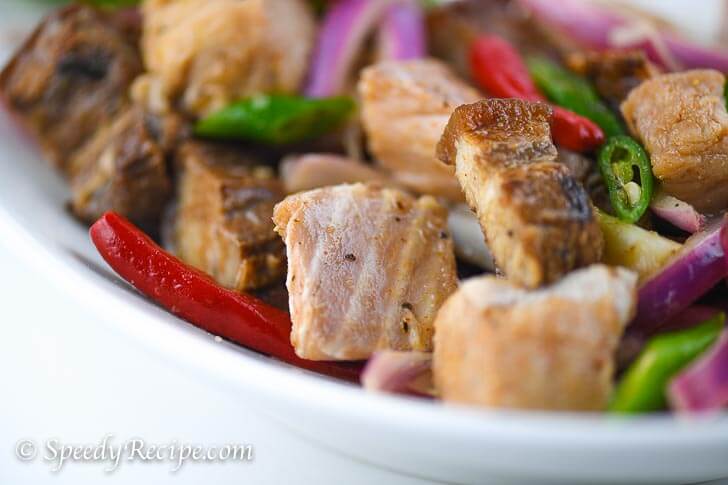
- Combine everything – Once the tuna has finished curing, toss in the grilled pork belly, sliced onions, chopped green chili, and red chilies. Use a spoon to mix gently without breaking up the tuna. Let it sit for 5–10 minutes so the flavors blend.
- Taste and chill – Before serving, give it a taste. Adjust the salt or pepper if needed. Some people like it after a longer chill time in the fridge, but it’s also good served right after mixing. Just avoid letting it sit out too long at room temperature.
What to Have with Sinuglaw
Sinuglaw hits best when it’s served cold, straight out of the fridge. I usually eat it with hot rice on the side and a cold drink in hand. The contrast between the grilled pork and citrus-cured tuna makes it refreshing, especially on humid afternoons.
- Boiled Saba Bananas – These give a mildly sweet contrast that cuts through the acidity. The soft banana flesh works well with the chew of pork and the firm tuna cubes. You can find this pairing on many Mindanao tables, especially during backyard meals.
- Grilled Eggplant – The smoky flavor from charred eggplant echoes the pork belly, tying the plate together without competing with the fish. You can serve it plain or mash it with a little vinegar and salt for a quick side. Try this grilled eggplant with garlic and ginger recipe.
- Inihaw na Pusit (Grilled Squid) – The grilled squid doesn’t overpower sinuglaw and blends right in with its smoky, meaty profile. If you’re serving sinuglaw for a get-together, having this side dish stretches the protein variety. Or if you want a more speedy squid recipe, try this spicy calamari.
- Plain Cold Beer or Ice Tea – While not a dish, drinks are part of the combo. Sinuglaw is often pulutan, so it’s common to see it on the table with beer. If you’re not drinking alcohol, iced calamansi tea is a good alternative to keep things refreshing.
Sinuglaw isn’t a heavy meal, but it has strong flavors. Pairing it with softer or grilled sides gives your plate contrast without fighting for attention. Whether you’re eating alone or serving guests, this dish holds up with minimal effort, just chill, mix, and plate.
Sinuglaw Recipe
Ingredients
- 1/2 lb. grilled pork belly, chopped
- 6 ounces fresh tuna steak, cubed
- 2 pieces green chili pepper, chopped
- 6 pieces red chili pepper
- Juice from 2 lemons
- 2 tablespoons white or cane vinegar
- 1 medium red onion, sliced
- ¼ teaspoon powdered ginger
- ½ teaspoon sugar
- ½ teaspoon salt
- ¼ teaspoon ground black pepper
Instructions
- Combine lemon juice, vinegar, powdered ginger, salt, sugar, and ground black pepper in a bowl. Stir.Juice from 2 lemons, 2 tablespoons white or cane vinegar, ¼ teaspoon powdered ginger, ½ teaspoon sugar, ½ teaspoon salt, ¼ teaspoon ground black pepper
- Add the cubed tuna. Cover the bowl and then marinate for at least 30 minutes. Note: the longer you marinate the better it gets.6 ounces fresh tuna steak
- Add the grilled pork belly, green and red chili peppers, and onion. Toss.1/2 lb. grilled pork belly, 2 pieces green chili pepper, 6 pieces red chili pepper, 1 medium red onion
- Serve immediately or let the mixture marinate longer before serving.
Recipe Notes
- Use fresh tuna only. Frozen tuna can work in a pinch, but it often releases too much water and turns soft. Always go for freshly caught or sashimi-grade cuts for the cleanest result. Avoid parts with sinew or connective tissue, those turn stringy and chewy, which ruins the bite. Aim for the loin or belly portion if available.
- Watch your marinating time. Don’t go overboard. After 30–60 minutes, the acid will keep “cooking” the tuna, which can lead to a mushy texture if left too long in the liquid.
- Charcoal-grilled pork belly works best. If you have leftover liempo, that’s great. But grilling it fresh over charcoal brings in a smoky taste you can’t get from pan-frying or oven roasting.
- Soften the onion bite. Red onions can get harsh. A quick soak in cold water before adding them to the mix makes a big difference.
- Adjust the spice level carefully. Red chilies can surprise you. Always taste as you go and adjust based on your heat preference, or split the dish and do two versions if you’re feeding guests.




Leave a Reply