
You’ll spot Filipino pancit canton in birthday spreads, neighborhood fiestas, and carinderias from Luzon down to Mindanao. It’s a crowd-feeder on special occasions but also fits right into busy weeknights, especially when you want a meal that satisfies without taking over your whole afternoon. Office workers grab it from stalls for a quick lunch, while families pass it around the table during Sunday lunch.
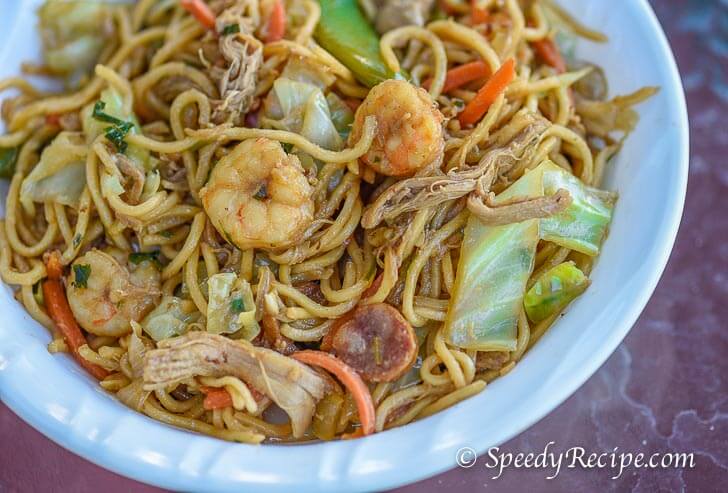
I enjoy this Filipino pancit canton best with hot pan de sal or lumpiang shanghai on the side. It feels complete that way, and since this dish comes together speedy enough, I can fix it even on a tight schedule. What I did in this version is double down on the vegetable mix while keeping the shrimp and chicken tender by cooking them in batches. I also included Chinese sausage, which adds another layer of richness that ties well with the soy-based sauce.
What is Filipino Pancit Canton?
Filipino pancit canton is a noodle stir-fry dish that uses dried wheat noodles called “canton” as the base. The name comes from the Hokkien word for noodles and the influence of early Chinese trade in the Philippines. Canton noodles resemble dried egg noodles and cook fast once soaked in broth or sauce.
This dish gained popularity because it stretches ingredients and feeds many, even with just a few proteins and vegetables. Outside the Philippines, it’s often recreated by Filipinos overseas who want a taste of home or by food lovers discovering how quick and hearty it is.
One thing many don’t know is that the noodles used in every Filipino pancit canton recipe are already steamed and then dried, which makes them perfect for fast cooking. So a common mistake is overcooking the noodles until soggy because some people think that they’re still raw after some time in the pan.
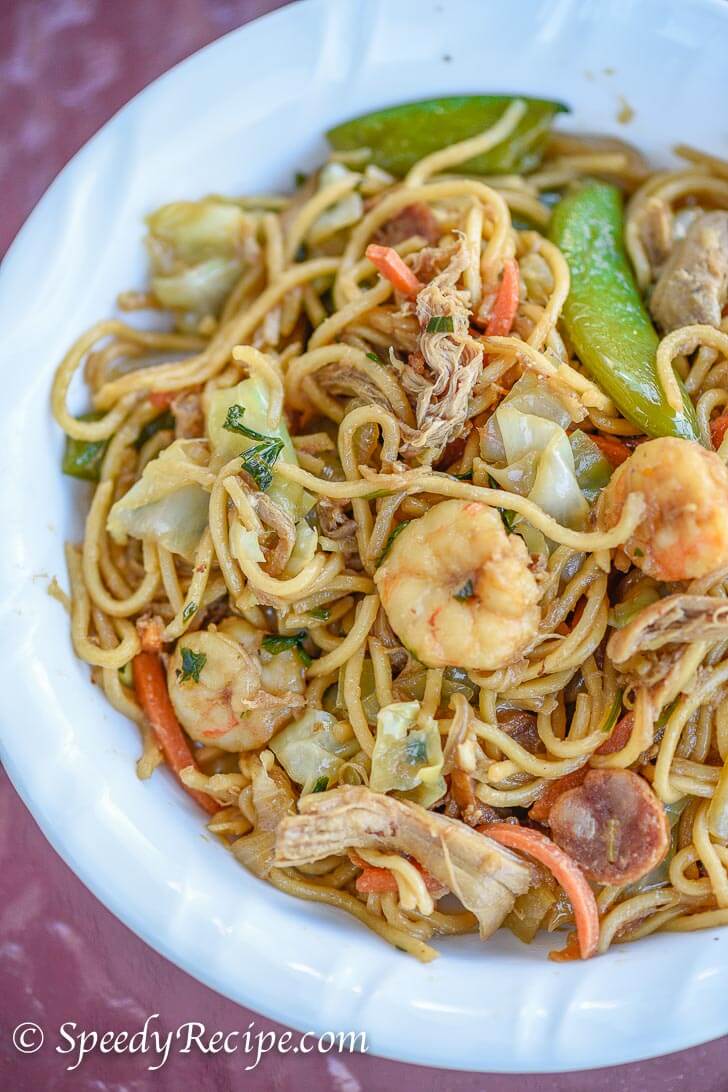
Ingredients of Filipino Pancit Canton
- Pancit Canton flour stick noodles (8 oz.) – These dried noodles cook quickly and absorb liquid well. They serve as the main base and give the dish its name.
- Small shrimp, shelled (12 to 15 pieces) – Shrimp adds seafood flavor and cooks fast in the broth. I prefer small ones since they’re easy to toss with the noodles.
- Cabbage, chopped (½ head, small) – Cabbage softens just enough in the stir-fry. It adds volume and soaks up flavor from the soy sauce and broth.
- Snap peas (20 pieces) – They hold their shape well and give a clean bite. I always add these last to keep their snap.
- Flat leaf parsley, chopped (3 tablespoons) – Adds brightness and a slightly grassy note. It also freshens the dish without being overpowering.
- Carrot, julienned (1 small) – This brings in color and a faint sweetness. Cut thin so it cooks at the same pace as the other vegetables.
- Chinese sausage, sliced thin (2 pieces) – This sausage is slightly sweet and rich. It browns fast and gives depth to the stir-fry.
- Chicken breast, boiled and shredded (6 oz.) – Chicken makes it filling and helps stretch the dish. I keep the broth from boiling to use later in the sauce.
- Celery, chopped (2 stalks) – This adds a soft crunch and an herbal taste. It blends well with onion in the base aromatics.
- Yellow onion, sliced (1 medium) – It’s the first thing to hit the pan and builds the dish’s base flavor. Slice it thin so it cooks evenly.
- Soy sauce (4 tablespoons) – Acts as the main seasoning. It colors the noodles and pulls all the ingredients together.
- Canola oil (3 tablespoons) – Neutral and high-heat friendly. It keeps everything from sticking and lets the noodles glide while tossing.
How This Filipino Pancit Canton Stands Out
Many pancit canton recipes online rely heavily on instant mixes or pre-packed seasoning, which can lead to overly salty results. Others skip the step of boiling chicken for fresh broth, and instead, they settle for water or bouillon cubes. Some versions also overload the pan with all ingredients at once, which often leads to limp vegetables and unevenly cooked meat.
In contrast, my method builds flavor in layers. I also used homemade chicken broth that gives the noodles a richer base, and adding Chinese sausage boosts the dish without the need for MSG or powdered flavoring.
How to Cook Filipino Pancit Canton
- Prepare the base aromatics – Heat 3 tablespoons of canola oil in a wok over medium heat. Sauté 1 medium sliced yellow onion and 2 chopped celery stalks until they soften and release their aroma. This step sets the flavor foundation before anything else goes in. Keep the heat steady to avoid browning the onions too fast.
- Cook the proteins separately – Add 6 oz. of shredded boiled chicken breast and 2 thinly sliced Chinese sausages. Stir-fry for about 3 minutes until the sausage renders its fat. Let the sausage flavor blend into the base, while the chicken warms up and starts absorbing it. This layering gives the proteins a better finish.
- Add early vegetables – Stir in 1 small julienned carrot and 3 tablespoons of chopped flat leaf parsley. Continue stir-frying for another 2 to 3 minutes. Carrots need a bit more time to soften, so it helps to put them ahead of the greens. The parsley adds a light aroma at this stage without darkening.
- Toss in quick-cooking greens – Add 20 pieces of snap peas and ½ head of chopped cabbage. Keep the toss light and cook for 2 minutes more. These vegetables need just enough heat to soften slightly while staying crisp. This way, they won’t turn soggy when mixed with the noodles.
- Add shrimp and season – Stir in 12 to 15 shelled small shrimp. Pour in 4 tablespoons of soy sauce and enough chicken broth from your boiled chicken to moisten the mix (about ½ to ¾ cup). Let this boil gently so the shrimp cooks through and turns opaque. This broth also seasons the noodles in the next step.
- Add the noodles – Drop in 8 oz. of pancit canton flour stick noodles directly into the pan. Gently toss with tongs or large spoons until the noodles soften and soak in the liquid. It takes just a few minutes since the noodles are pre-steamed and dried. Keep folding from the bottom to distribute heat evenly.
- Final toss and serve – Once the noodles are soft and everything looks blended, turn off the heat. Plate this Filipino pancit canton right away to avoid overcooking. I like to squeeze calamansi or lime on top just before serving. The acid cuts through the richness and brightens each bite.
What to Have with Filipino Pancit Canton
When I serve Filipino pancit canton at home, I like to treat it as the center of the table. Its combination of shrimp, chicken, and sausage already covers a lot, but it still pairs well with classic sides that round out the meal. I usually lean toward simple fried snacks or something with a bit of acid to offset the soy-based sauce. Here are five popular Filipino pairings that work naturally with pancit canton.
- Lumpiang Shanghai – These crisp, ground pork spring rolls are nearly always beside pancit in Filipino parties.
- Pandesal – This soft bread roll soaks up the broth left on the plate. It’s a common breakfast or merienda pairing and adds comfort to the meal. Filipinos also like to add white bread if pandesal is nowhere nearby.
- Fried Chicken – Lightly fried chicken adds crunch and goes well with calamansi over the noodles.
- Iced tea – This cold beverage adds sharpness and cuts through the dish’s richness. Many households place a big pitcher on the side.
Altogether, these combinations let a Filipino pancit canton shine even more. If you’re cooking for a group or just fixing up a plate for yourself, pancit canton fits in anywhere. Be it breakfast, lunch, or early dinner.
Filipino Pancit Canton Recipe
Ingredients
- 8 oz. Pancit Canton, flour stick noodles
- 12 to 15 pieces small shrimp, shelled
- ½ head small cabbage, chopped
- 20 pieces snap peas
- 3 tablespoons flat leaf parsley, chopped
- 1 small carrot, julienned
- 2 pieces Chinese sausage, sliced into thin pieces
- 6 oz. chicken breast, boiled and shredded
- 2 stalks celery, chopped
- 1 medium yellow onion, sliced
- 4 tablespoons soy sauce
- 3 tablespoons canola oil
Instructions
- Heat oil in a wok.3 tablespoons canola oil
- Sauté onion and celery.1 medium yellow onion, 2 stalks celery
- Add the shredded chicken (save the chicken broth for later use) and Chinese sausage. Stir-fry for 3 minutes.6 oz. chicken breast, 2 pieces Chinese sausage
- Stir-in the carrot and parsley and continue to stir-fry for 2 to 3 minutes.1 small carrot, 3 tablespoons flat leaf parsley
- Add the snap peas and cabbage. Stir and cook for another 2 minutes.20 pieces snap peas, ½ head small cabbage
- Stir-in the shrimp and toss. Add soy sauce and chicken broth. Let boil.12 to 15 pieces small shrimp, 4 tablespoons soy sauce
- Add the flour sticks or pancit canton. Gently toss until the noodles become soft and all the ingredients are well blended.8 oz. Pancit Canton
- Transfer to a plate and serve with lime or calamansi.

Recipe Notes
- Boil chicken first before everything else. Boiling the chicken breast before the stir-fry not only softens the meat but gives you homemade broth that adds more flavor to the noodles. I recommend doing this step even if it seems like an extra task. Keep the broth warm and ready before you start cooking.
- Use Chinese sausage sparingly. It’s flavorful and slightly sweet, but too much can overpower the dish. Two small links are enough for this amount of noodles. Make sure to slice them thin so they cook fast and blend with the rest of the ingredients.
- Add shrimp at the right stage. Shrimp cook quickly and will turn rubbery if added too soon. Drop them in once the vegetables are nearly done and the liquid is starting to simmer. Watch closely and remove from heat once they curl and change color.
- Avoid soaking the noodles in water. Pancit canton noodles don’t need to be pre-boiled. They go directly into the pan with the broth. Stir them often so they absorb the liquid evenly.
- Where to get pancit canton noodles. If you’re not in the Philippines, try looking for them in Asian grocery stores under brands like Excellent or Payless (the dry type, not the instant). Make sure to check that they’re not flavored instant noodles.




Leave a Reply