
Chop Suey is one of those everyday dishes that shows up at home, in school lunches, or even at fast food chains in the Philippines. It’s not reserved for anything special, but it’s always welcome on the table. People usually eat it with white rice, and it’s often cooked when there are leftover vegetables in the fridge that need to be used.
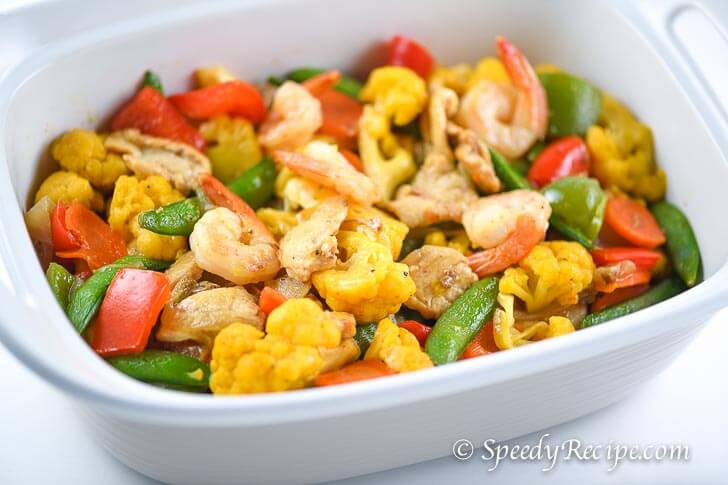
What I like most about this version is that it’s fast and doesn’t taste rushed. The vegetables stay crisp, the chicken soaks up flavor from the broth, and the shrimp gives it a good punch. I usually pair it with fried rice or garlic rice when I want something heavier. It also works well as a packed lunch since the sauce holds up even after reheating.
This version keeps it clean and flexible. I don’t add too much cornstarch so it doesn’t get goopy, and I leave the vegetables chunkier than usual. You’ll also notice I added chicken liver for a richer taste, optional, but worth it.
What is Chop Suey?
Chop Suey is a stir-fried dish that usually combines sliced meat, shrimp, and mixed vegetables in a light, glossy sauce. The name is believed to come from the Cantonese phrase “tsap seui,” which means “miscellaneous leftovers.” That pretty much sums up the spirit of the dish, use what you have and throw it into the wok.
It’s popular in Chinese-Filipino households and is often served at casual meals. In the Philippines, we lean more toward a saucy version with protein-heavy toppings. You’ll also find that ours is less oily, with more garlic and added liver for depth. Some even believe that this dish is the inspiration behind “Chow Mein” when noodles are added in. Over time, it became a fridge-clean-out classic that doesn’t feel like an afterthought.
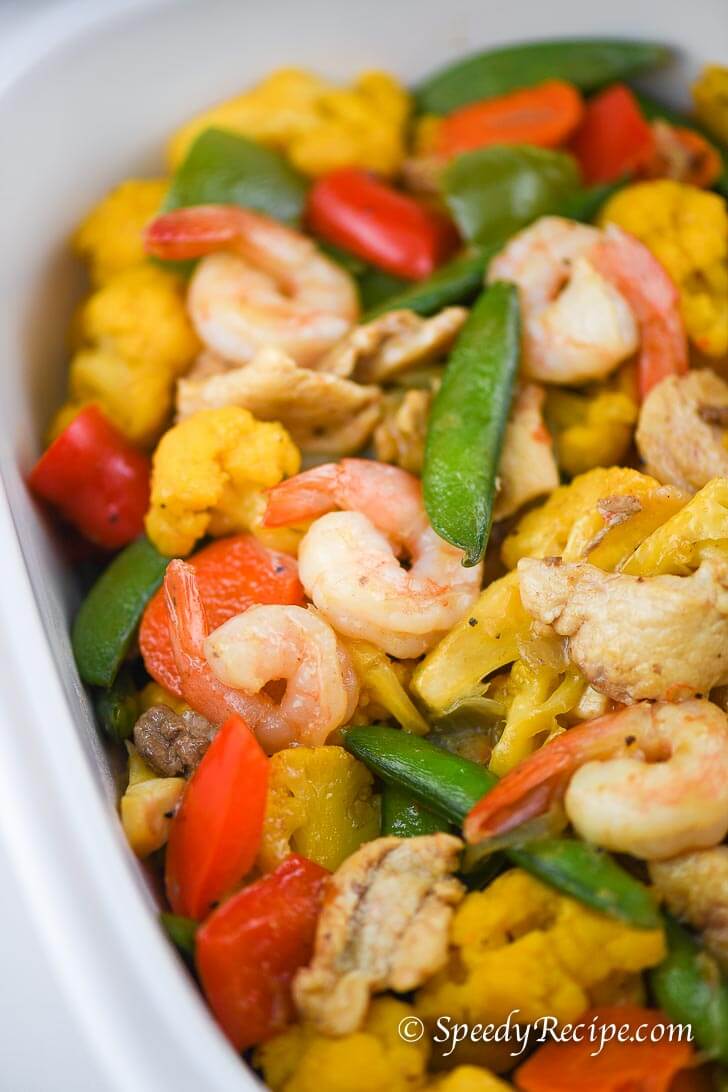
Ingredients of Chop Suey
Seafood and Meat
- Medium shrimp (12 to 15 pieces) – These add bite and a light seafood taste. Peel and devein them before cooking so they cook evenly and stay clean.
- Boneless chicken breast (6 ounces) – Sliced thin for quicker stir-frying. I use this as the main protein to keep it lean and easy to cook.
- Chicken liver (3 ounces) – Adds a richer, deeper taste to the base. It also softens into the sauce, giving it a slightly thicker mouthfeel.
Vegetables
- Red bell pepper (1 medium) – For sweetness and color. Sliced into strips, it holds up well under heat.
- Green bell pepper (1 medium) – Slightly more bitter than red, which gives contrast. I keep it in bigger slices so it doesn’t get soggy.
- Snap peas (½ lb.) – Crunchy and mildly sweet. I don’t trim the ends too short because they help the peas hold shape.
- Cauliflower (1 small head) – Soaks up the broth while staying firm. Break it into small florets for even cooking.
- Carrots (2 medium, sliced) – Add natural sweetness and firmness. Slice them thin on a diagonal so they cook through without turning mushy.
- White onion (1 medium, sliced) – Adds base flavor that mellows out as it cooks. I keep the slices medium-thick so they don’t melt away.
- Garlic (5 cloves, minced) – The foundation of flavor in many Filipino stir-fries. You’ll want it golden but not burned.
For the Sauce
- Chicken broth (1 cup) – Acts as the sauce base and adds depth to the flavor. I use homemade when I have it, but store-bought works fine.
- Cornstarch (2 teaspoons) – Thickens the sauce. Always mix it with water before adding it to avoid lumps.
- Water (3 tablespoons) – Used to dissolve the cornstarch. This step keeps the sauce smooth instead of clumpy.
- Salt and ground black pepper (to taste) – Simple seasoning to adjust at the end. Taste before serving because the broth might already have salt.
For Cooking
- Vegetable oil (4 tablespoons total) – Needed for stir-frying. I use part of it for the shrimp and the rest for the vegetables and meat.
What You’ll Notice in Speedy Recipe’s Chop Suey
Most versions you’ll find online lean into shortcuts, like frozen vegetable mixes or canned baby corn. Some use soy sauce for color, which turns the dish darker and saltier than it needs to be. Others skip the shrimp or liver, which limits the layers of taste you get in each bite.
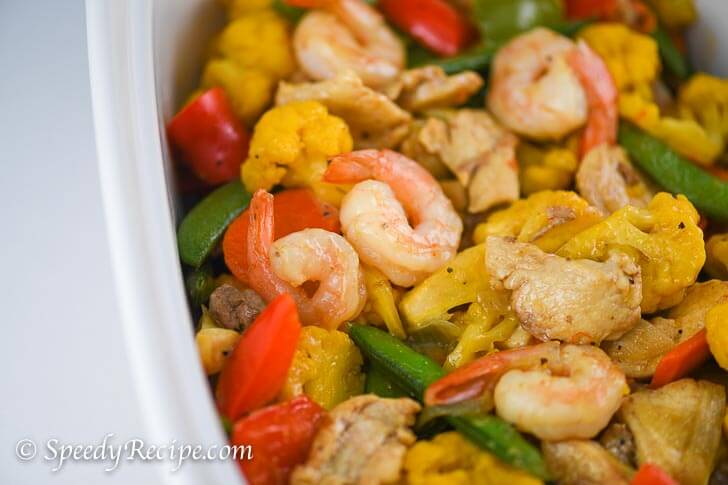
What I do differently here is keep the sauce light and let the broth and garlic build the base. I skip soy sauce completely and rely on a clean chicken broth thickened just enough to coat everything. This keeps the vegetables looking fresh instead of staining them brown.
Compared to traditional Chinese-American versions, the Filipino-style Chop Suey often includes liver and more garlic, and the veggies are chunkier with a bit of bite left in them. We also serve it with plain rice, not noodles or fried rice.
The method I use is built for speed without rushing the flavor. Now let’s go over how to pull it together step-by-step.
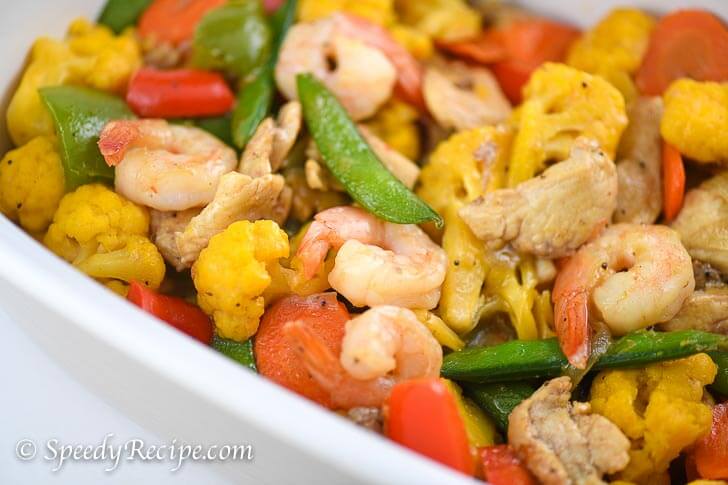
How to Cook Chop Suey
- Start with the shrimp – Heat 2 tablespoons of vegetable oil in a large pan or wok. Once hot, toss in the peeled and deveined shrimp and stir-fry for just 1 to 2 minutes until they turn pink. Take them out right after and set them aside so they don’t overcook. This way, they stay plump when you add them back later.
- Build the base with aromatics – In the same pan, pour in the remaining 2 tablespoons of oil. Add the minced garlic and sliced onions, then stir until the onions start to soften. Don’t wait for them to brown, just let them get tender. This step builds the base flavor for the whole dish.
- Cook the meats properly – Add the sliced chicken breast and chopped chicken liver. Stir-fry for 3 to 4 minutes until the chicken loses its pink color and the liver looks firm. Don’t worry about cooking them through yet as this happens fully when the broth goes in.
- Toss in the vegetables – Add the sliced carrots first, then toss in the cauliflower, snap peas, and both bell peppers. Stir-fry everything together for about 3 minutes. This keeps the veggies crisp and gives them a head start before the broth simmers.
- Simmer with broth – Pour in 1 cup of chicken broth. Let it boil briefly, then reduce the heat to low and cover the pan. Let it simmer for 10 to 12 minutes so the chicken finishes cooking and the vegetables absorb flavor.
- Thicken the sauce – While the dish simmers, mix 2 teaspoons of cornstarch with 3 tablespoons of water until smooth. Pour this mixture into the pan and stir well. The sauce will start to thicken slightly, don’t rush it, just give it another 2 minutes on low heat.
- Finish and season – Return the shrimp to the pan. Add salt and pepper to taste and give it a final stir so the shrimp heats through and the seasoning blends in. Once the sauce reaches your preferred thickness, turn off the heat and you’re done.
What to Have with Chop Suey
I usually eat Chop Suey with hot white rice. The sauce soaks into the grains and makes it extra satisfying. Since it’s not too heavy, it pairs well with fried sides or something with a bit of crunch.
- Garlic Fried Rice – Garlic rice adds richness and extra punch without overpowering the dish. The toasted garlic bits give the meal a stronger aroma. This pairing works especially well if you want to skip adding extra salt.
- Lumpiang Shanghai – These crispy pork spring rolls give texture and variety. I usually bite into one between spoonfuls of Chop Suey just to switch things up. Serve with sweet chili sauce for dipping.
- Fried Bangus – Milkfish adds a fried, fatty layer that rounds out the meal. Just slice, season, and fry until golden. Its strong taste holds up well against the milder stir-fry.
- Pancit Canton – This noodle dish is perfect if you want to double up on vegetables. It’s saucy and filling but still light enough to share space on the plate. Some even mix them together for a loaded meal.
Chop Suey stays flexible. You can serve it next to heavy mains or let it carry the meal with just rice and one other side. I like that it doesn’t demand a full spread, just two items on the plate and it still feels complete. For me, Chop Suey is the kind of dish you don’t have to dress up or rethink. Just serve it warm, and it does the job!
Chop Suey Recipe
Ingredients
- 12 to 15 pieces medium shrimp, scales removed and deveined
- 6 ounces boneless chicken breast, thinly sliced
- 3 ounces chicken liver, chopped
- 1 medium red bell pepper
- 1 medium green bell pepper
- ½ lb. snap peas
- 1 small cauliflower, any color
- 2 medium carrots, sliced
- 1 medium white onion, sliced
- 5 cloves garlic, crushed and minced
- 2 teaspoons cornstarch
- 3 tablespoons water
- 1 cup chicken broth
- 4 tablespoons vegetable oil
- Salt and pepper to taste
Instructions
- Heat 2 tablespoon of vegetable oil in a pan.4 tablespoons vegetable oil
- Once hot, quickly add the shrimp. Stir-fry for 1 to 2 minutes. Remove from the pan. Set aside.12 to 15 pieces medium shrimp
- Add the remaining oil. Saute garlic and onion until the onion gets tender.5 cloves garlic, 1 medium white onion
- Add the chicken breast and chicken liver. Stir-fry for 3 to 4 minutes.6 ounces boneless chicken breast, 3 ounces chicken liver
- Add the carrots, cauliflower, snap peas, and bell peppers. Continue to stir fry for 3 minutes.1 medium red bell pepper, ½ lb. snap peas, 1 small cauliflower, 2 medium carrots, 1 medium green bell pepper
- Pour the chicken broth. Let boil. Set the heat to low. Cover the pan and continue to cook in low heat for 10 to 12 minutes.1 cup chicken broth
- Combine cornstarch and water. Mix well. Pour into the pan. Stir.2 teaspoons cornstarch, 3 tablespoons water
- Add the shrimp, salt , and ground black pepper. Cook until the sauce thickens to your preference.Salt and pepper to taste
- Serve with rice
Recipe Notes
- Cut your vegetables evenly. If your carrots are too thick and your snap peas too thin, they’ll cook unevenly. Keep your knife cuts uniform so everything softens at the same pace and doesn’t fall apart in the sauce.
- Don’t overcook the shrimp. Shrimp goes rubbery fast if left in too long. That’s why it’s stir-fried first, taken out, and only added back at the very end, just enough to heat through without turning chewy.
- You can skip the liver, but it adds something extra. If you’re not into liver, leave it out. But if you use it, don’t cook it too long or it turns chalky. A short stir-fry plus simmering in the broth is enough.
- Use high heat but watch the oil. Too little oil and your garlic burns fast. Too much and the dish turns greasy. Stick with the amount listed, and work fast while tossing.
- Mix the cornstarch completely before pouring. Lumps won’t dissolve once they hit the hot broth. Stir it in water until fully smooth, then pour slowly while stirring to get that light gloss on the sauce.




Leave a Reply