
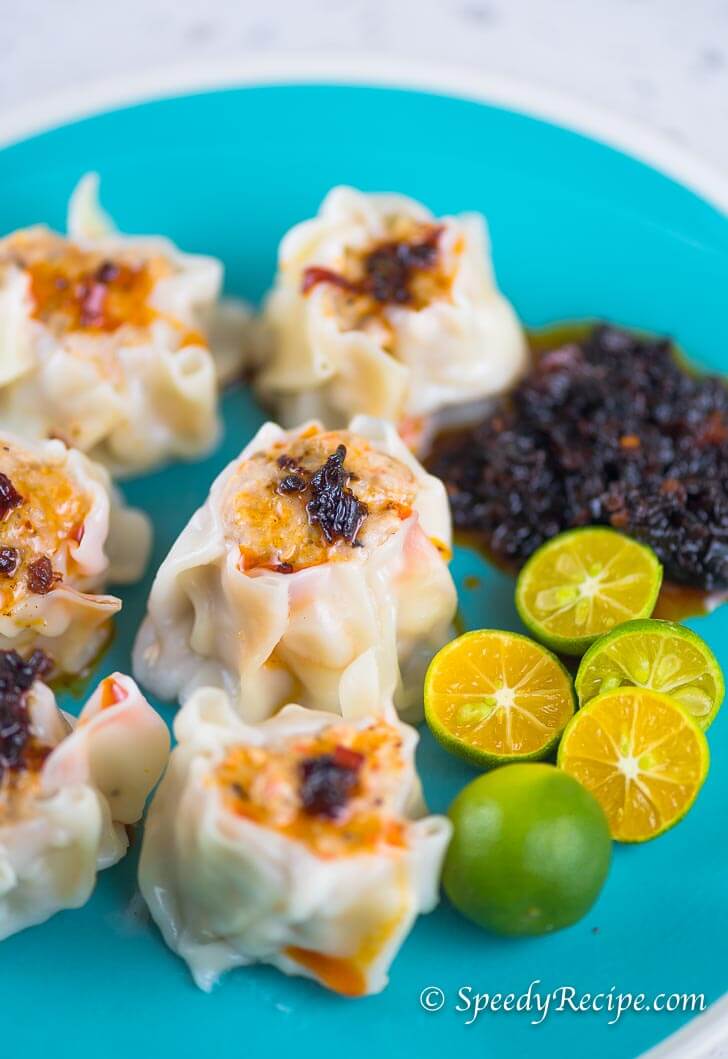
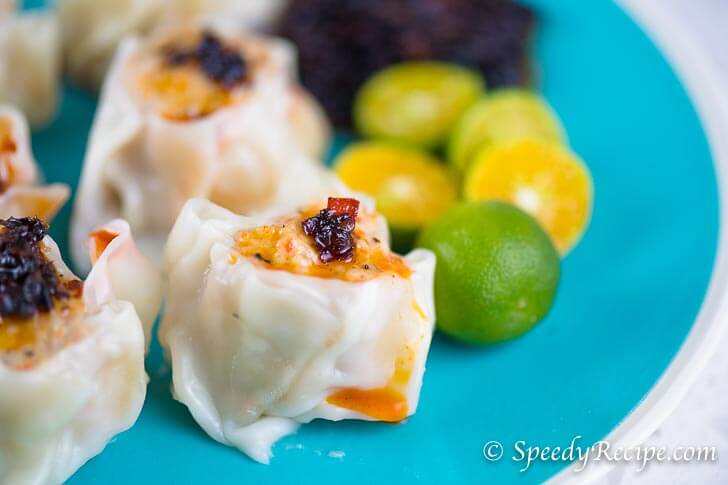
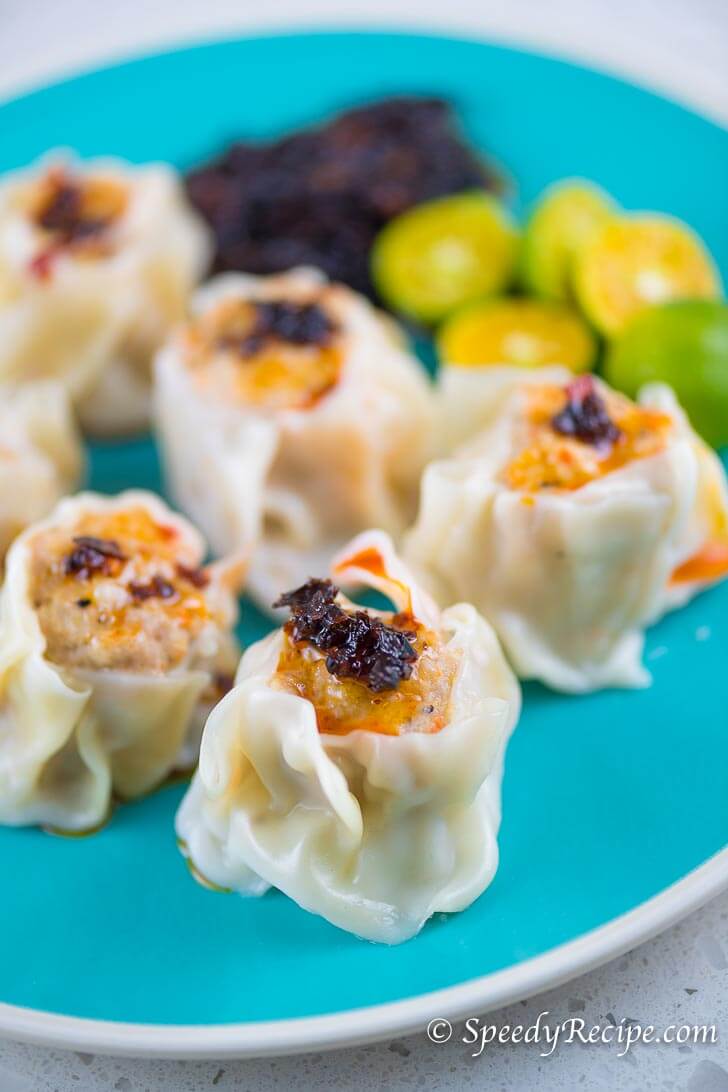
Pork Siomai is a Filipino steamed dumpling filled with ground pork, shrimp, and minced vegetables, all wrapped in a thin wonton skin and left open at the top. The filling gets its flavor from sesame oil, and the whole thing steams in about 20 minutes. Filipinos eat it as merienda, as pulutan with drinks, or just as a snack any time of day. Most of the time, it shows up on a plate with a small dish of soy sauce and calamansi beside it, and a spoonful of chili garlic paste if you want heat.

This is the siomai recipe I keep going back to. I first made it after a trip to a Filipino supermarket in Chicago where I found fresh calamansi, which is not easy to come by in that part of the country. I grabbed a pack of wonton wrappers while I was there, and this recipe came together that same afternoon. The filling is simple. Ground pork, shrimp, sesame oil, egg, vegetables. One bowl. No starch, no filler. It has not changed much since then because it did not need to.
What Is Siomai?
Siomai is the Filipino take on shumai, a Chinese dumpling that arrived through trade centuries ago. The Cantonese version usually has a yellow egg-based wrapper and sits in a bamboo steamer at dim sum restaurants. The Filipino version went its own way. Thinner wonton wrappers. Ground pork stretched with vegetables. Sold from carts parked outside schools and offices, steamed in stacked metal trays, almost always eaten with soy sauce, calamansi, and chili garlic paste. It is different from lumpiang shanghai — that one is rolled shut and fried — but the two share a ground pork base and tend to show up at the same parties.
Ingredients
- Ground pork – Not lean. Regular ground pork. The fat is what keeps siomai moist after 20 minutes of steam. Lean pork dries out.
- Shrimp – Six medium pieces, minced small. They give the filling a slight sweetness that sesame oil alone cannot do. You will not taste “shrimp” in the finished siomai, but you will notice if it is missing.
- Jicama (singkamas) – This one is optional but I include it when I can find it. Jicama holds a small crunch even after steaming, and that texture contrast matters in a filling that is otherwise uniformly soft. Water chestnuts work if jicama is unavailable.
- Yellow onion – Mince it until it almost disappears. Chunks of onion inside a siomai create raw pockets that taste sharp and unpleasant.
- Carrot – Fine mince. A bit of color, a bit of natural sweetness.
- Mushrooms – Minced small. They soak up pork fat and sesame oil during steaming and make each bite taste fuller.
- Egg – Binder. Without it the filling falls apart the moment you lift the siomai off the steamer tray.
- Sesame oil – One and a half tablespoons. This is the ingredient that makes siomai smell like siomai. Walk past any siomai cart in Manila and that is what you are smelling. Do not leave it out.
- Wonton wrappers – Thin, square ones. Not the thick round gyoza kind. The thin wrappers go slightly translucent when steamed, which is correct.

How to Cook Pork Siomai
Most of the work here is chopping. Once the filling is mixed, wrapping and steaming goes fast.
Prepare the Filling
- Mince the carrot, onion, mushrooms, and shrimp. Everything goes into a large mixing bowl.
- Add ground pork, sesame oil, salt, pepper, and the egg.
- Mix by hand until the whole thing feels sticky and holds together when you press a handful.
- Set the bowl aside.
Use your hands for this, not a spoon. You can feel when the egg has bound the pork properly — the mixture gets tacky and clings to your fingers. That is how you know it will hold inside the wrapper.
Wrap the Siomai
Siomai stays open at the top. You are not sealing it like a dumpling.
- Scoop about 1 to 1½ tablespoons of filling into the center of a wonton wrapper.
- Gather the wrapper edges up around the filling and press gently into an open cup shape.
That is it. The top of the filling should be visible. If the wrapper will not stick to itself, wet your fingers slightly and press the sides. Keep the rest of your wrappers under a damp towel — they dry out in minutes and crack when you try to fold them.
Steam
- Line your steamer tray with parchment paper or brush it with a thin layer of oil.
- Place the siomai about half an inch apart.
- Steam over high heat, 20 to 25 minutes.
- Serve immediately.
You will know they are done when the wrappers go slightly translucent and the filling feels firm if you press the top gently. If you are making a large batch, work in rounds. Overcrowding the steamer traps moisture between the pieces and makes the wrappers soggy on the sides.

Tips
- Mince everything as fine as you can. Visible chunks of carrot or onion mean the filling will not hold together. You want a smooth, uniform mixture.
- One to one and a half tablespoons per wrapper. That is the right amount. Overpacked siomai burst through the thin wrapper during steaming, and then you have a mess.
- Use parchment in the steamer. Or cabbage leaves, or lettuce. Street vendors in the Philippines use whatever is available — the point is that thin wonton wrappers will tear off a bare steamer tray and ruin the bottom of every piece.
- Pan-frying works too. Fry them in a little oil until the bottoms go golden. Then splash in some water, cover, and let them steam 3 to 4 minutes. Crispy bottom, soft top. That is how a lot of carinderia serve fried siomai.
- Taste the filling before you wrap everything. Cook a small pinch in a pan. Thirty seconds. Taste it. Adjust the salt now, not after you have wrapped 30 pieces. I picked this up from making lumpiang shanghai — same idea, different wrapper.
What to Serve with Pork Siomai
- Soy sauce and calamansi – The standard dip. Soy sauce, squeeze of calamansi or lime, done. Some people add a few drops of sesame oil to the dip too, which I like.
- Chili garlic paste – Not mixed into the soy dip. On the side, so each person controls the heat.
- Pancit Canton – Noodles and siomai is a common merienda pairing. The two just go together.
- Spicy Calamari – Fried calamari next to steamed siomai covers two textures at once if you are setting up a spread for guests.

Storage & Reheating
Cooked siomai keeps in the fridge for 3 days in a sealed container. For longer storage, freeze them uncooked — lay them on a parchment-lined tray, freeze until solid (about 2 hours), then transfer to a bag. Good for a month. Steam from frozen, no need to thaw, just add 5 extra minutes. One thing: do not refrigerate uncooked siomai. The moisture from the filling soaks through the thin wrapper and turns everything into a sticky, unusable lump.
More Filipino Recipes
- Filipino Lumpiang Shanghai – Ground pork spring rolls, fried until crispy. If you are already making siomai filling, lumpia uses almost the same base.
- Dynamite Lumpia – Stuffed chili peppers in a lumpia wrapper, fried. Spicy and good alongside siomai for a party table.
- Chicken Chow Mein – Stir-fried noodles with chicken and vegetables. A heavier dish that pairs well with lighter steamed dumplings.
- Pork Dinakdakan – Grilled pork face in vinegar and mayo dressing. Both this and siomai are common pulutan.
- Garlic Butter Shrimp – If you bought shrimp for siomai and have extra, this recipe uses them up quickly.
- Popcorn Chicken – Bite-sized fried chicken. Works on the same snack platter as siomai.
Frequently Asked Questions
Can I use chicken instead of pork?
Yes. Ground chicken works. It will be lighter and leaner, so add a bit more sesame oil and do not be shy with the salt — chicken does not bring as much flavor on its own as pork does.
Why did my wrappers turn hard after steaming?
Wrapper quality, most likely. Or the water was not at a full boil when you started steaming. Cheap, thick wrappers do this. Look for thin wonton wrappers — not the round gyoza kind — and keep the lid sealed tight so steam does not escape.
Can I fry siomai instead of steaming?
Pan-fry in a bit of oil, bottoms down, until golden. Add water to the pan, cover, 3 to 4 minutes. Done. The bottom is crispy and the filling cooks through from the steam. A lot of street vendors and carinderia serve it this way.
How do I stop them from sticking to the steamer?
Parchment paper. Or oil the tray. Or lay down cabbage leaves. Any of those will work. The thin wonton wrappers will tear off a bare steamer surface every time.
Can I make the filling ahead?
Up to a day in advance. Cover the bowl tightly — sesame oil is fragrant and it will get into everything else in your fridge if you leave it uncovered. Letting the filling sit actually helps the flavors settle, so this is not a bad idea if you are prepping for a party.
This pork siomai recipe is one I have been making for years now. The ingredients are cheap, the prep is mostly chopping, and the steaming takes care of itself. Give it a try and let me know how yours turned out.
Pork Siomai Recipe (Shumai)
Ingredients
- 1 1/2 lbs ground pork
- 6 shrimp
- 1/2 cup Jicama, singkamas – optional
- 1 yellow onion
- 1 carrot
- 1/2 cup mushrooms
- 1 egg
- 1 1/2 tablespoons sesame oil
- 1/2 teaspoon ground black pepper
- 2 teaspoons salt
- 1 pack wonton wrapper, shumai wrapper
Instructions
- Mince the carrot, onion, mushroom, and shrimp. Place all the minced ingredients in a large mixing bowl.
- Add the ground pork, sesame oil, salt, pepper, and egg. Mix until all the ingredients are well blended.
- Scoop 1 to 1 1/2 tablespoons of the shumai mixture. Put it in the middle of a Won ton wrapper. Secure while leaving the top open.
- Arrange the wrapped siomai into a steamer. Steam for 20 to 25 minutes.
- Serve with chili garlic paste and a dip of soy sauce and calamansi (or lime).






Leave a Reply