
Oven baked salmon is a weeknight regular in the US and many parts of Europe. It’s eaten warm for dinner, often paired with grains or vegetables, and usually cooked in small batches for individual servings. Many people rely on it for light lunches or office meal preps, especially with quinoa or couscous on the side.
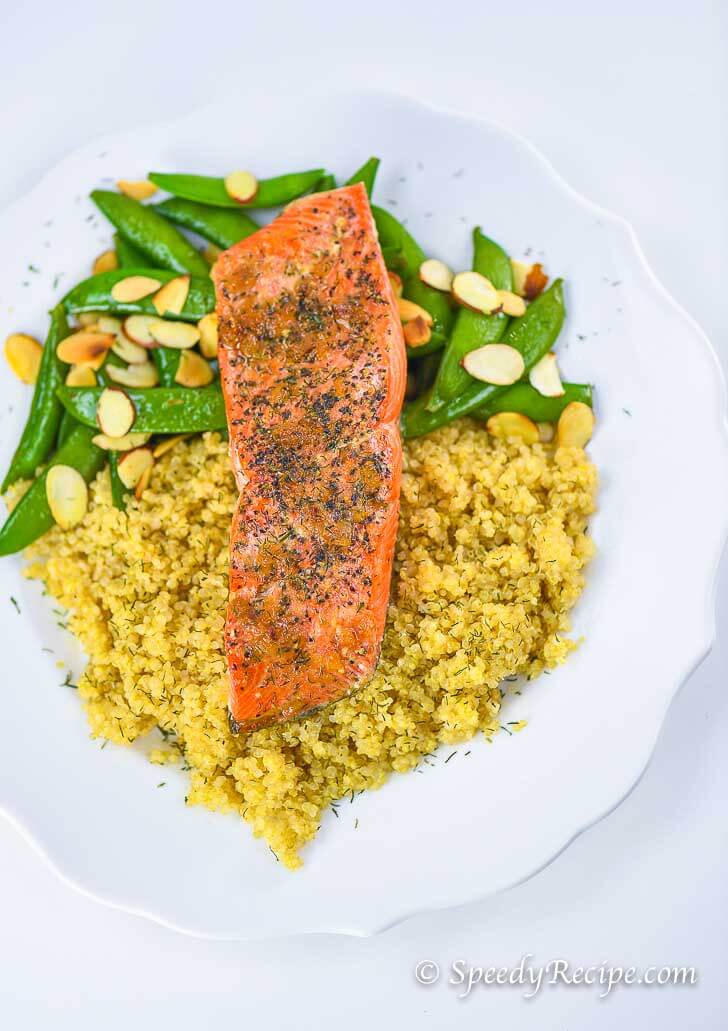
What I like about this version is that it takes barely 30 minutes, yet doesn’t feel thrown together. The rub on the salmon has dried dill and onion powder, which keeps it interesting without being overpowering. It goes well with lightly buttered rolls or even a spoonful of sour cream on the side, if you’re feeling like adding something creamy. You can also serve it with cold cucumber salad or simple grilled asparagus.
What makes this version stand out is the short oven time and the smart use of roasted pecans and snap peas. It doesn’t need dressing, extra garnish, or special seasoning blends. The flavors settle well together, and it still holds up nicely for next-day meals.
What is Oven Baked Salmon?
Oven baked salmon is exactly what it sounds like, salmon cooked in a heated oven until it flakes easily. There’s no frying or pan-searing involved. The technique gives the fish a clean taste and is a common way to cook salmon in the West. The term “baked” usually refers to cooking at a high enough temperature to cook through without drying out, especially important with fish.
People love it because it’s quick, low-fuss, and doesn’t need much beyond seasoning. Outside its usual places like the US, Canada, or Scandinavia, it’s also been picked up by people who want healthy, filling dishes without complicated prep.
Most don’t realize that the temperature and resting time matter more than how long the fish stays in the oven. Salmon continues to cook a bit even after it’s out of the heat. Another common mistake is over-oiling or over-seasoning. This version avoids both by using a dry rub that highlights the fish instead of burying it.
In Norway, oven baked salmon is sometimes served with butter sauce or boiled potatoes. In contrast, Mediterranean homes often pair it with grain salads or lemony sides. There’s also the habit of serving it cold with vinaigrettes, especially in warm climates. That’s how flexible it can be, and why this version with roasted snap peas and pecans isn’t out of place at all.
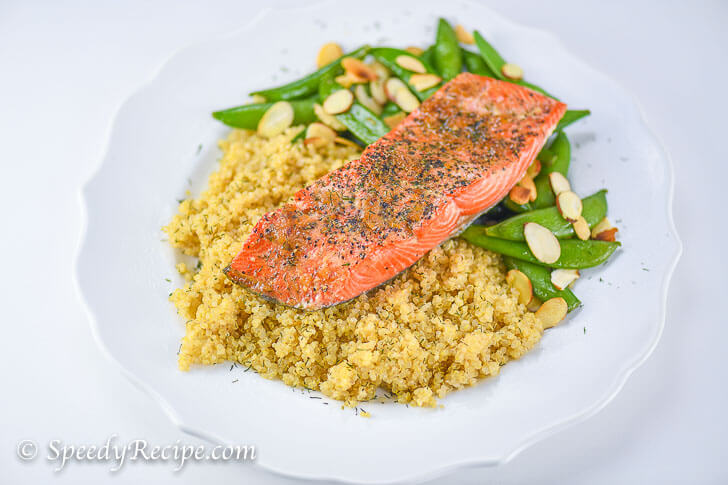
Ingredients of Oven Baked Salmon
- Salmon steak (3 ounces)
This is the main part of the dish. Use a fresh, thick cut with the skin on or off depending on your preference, but avoid overcooking to keep the meat moist. - Snap peas (12 to 15 pieces)
These give a crisp, green bite that breaks up the richness of the fish. Trim the ends but keep them whole so they roast properly. - Pecans, sliced (1/4 cup)
Toasted pecans add a nutty crunch. They roast quickly, so keep an eye on them so they don’t burn. - Olive oil (1 teaspoon)
Just enough to coat the peas and pecans lightly. It helps with browning and gives the vegetables a gentle sheen. - Cooked quinoa (1 1/4 cups)
This serves as the base of the meal. I use white quinoa because it cooks evenly and stays fluffy, but any type will work.
For the Rub
- Ground black pepper (1/4 teaspoon)
Adds just the right level of sharpness. Go for freshly ground if you can. - Dill weed (1/2 teaspoon)
Gives a clean, herbaceous lift to the salmon. Dried works fine here and blends well into the rub. - Onion powder (1/2 teaspoon)
Brings a mellow, savory tone without adding moisture. It’s one of those pantry staples that goes a long way in dry rubs. - Fine sea salt (1/4 teaspoon)
Seasoning that pulls everything together. If using kosher or table salt, adjust slightly since the grain size can change the outcome.
What You’ll Notice in Speedy Recipe’s Oven Baked Salmon
Most versions of oven baked salmon focus either on heavy seasoning or strong sauces. Some coat the fish in glazes, while others go overboard with lemon or butter. In contrast, this one keeps the seasoning dry and simple – just dill, onion powder, pepper, and a bit of salt. The fish doesn’t sit in marinade or get smothered in sauce. It’s all about letting the salmon do the work with just enough support from the sides.
A lot of online versions either skip the vegetable side or add too many at once. This one focuses on snap peas and pecans only. It’s just enough crunch and freshness without crowding the plate. The quinoa works as a neutral base and soaks up any juices from the salmon or snap peas without turning mushy.
Compared to traditional Western-style baked salmon, which often leans toward buttery or cream-based sides, this one keeps it lighter. It takes cues from health-forward meal prep recipes but still feels like a full dish.
How to Cook Oven Baked Salmon
- Preheat and prepare your rub – Start by heating the oven to 450°F. While it warms up, combine ground black pepper, dill weed, onion powder, and fine sea salt in a small bowl. Mix them well until the seasoning looks evenly blended. This simple mix goes directly on the salmon with no added liquids.
- Season the salmon – Take your salmon steak and pat it dry with a paper towel. Rub the seasoning blend generously on all sides of the fish. Let it sit for 15 minutes on the counter while you prepare the other ingredients. This gives the seasoning time to settle in.
- Bake the salmon – Place the salmon on a lightly greased baking tray or line it with parchment paper. Bake for 12 to 14 minutes, depending on the thickness of the cut. You’re aiming for the center to turn opaque and for it to flake when gently pressed with a fork. Take it out of the oven and let it rest while you prep the side.
- Toss the vegetables and nuts – In a bowl, combine the snap peas, sliced pecans, and olive oil. Toss them well so everything is lightly coated. Spread the mixture on a separate tray or one side of a large pan if you want to roast them together.
- Roast the snap peas and pecans – Lower the oven temperature to 400°F. Roast the snap peas and pecans for 5 to 8 minutes. The snap peas should stay bright with a slight char at the edges, and the pecans should smell toasty but not burnt.
- Warm the quinoa – While the vegetables roast, warm the cooked quinoa if it’s been prepped ahead. A quick microwave or a toss in a nonstick pan over low heat is fine. No need to add oil – just get it warm enough to serve.
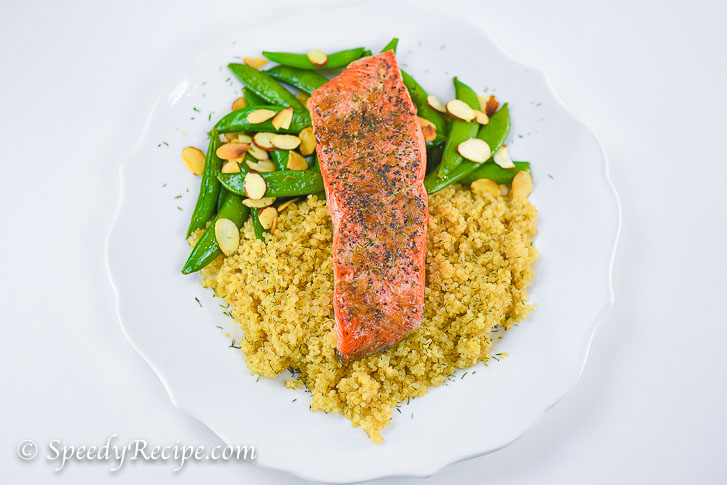
- Assemble the dish – On a plate, spoon a bed of quinoa. Add the roasted snap peas and pecans to one side. Place the baked salmon on top or just next to the grains, depending on how you want it served.
What to Have with Oven Baked Salmon
I usually enjoy oven baked salmon with a cold drink and something with citrus – either a wedge of lemon or a cucumber-based side. It works well for solo meals but also fits nicely into dinner spreads when paired right. The snap peas and quinoa already round it out, but if you’re serving more people or want variety, here are a few classic pairings.
- Garlic Mashed Potatoes – If you’re in the mood for comfort, mashed potatoes always work. The garlic keeps it from tasting plain, and the creaminess contrasts well with the roasted pecans and peas. Speedy Recipe has a version that uses roasted garlic and just a touch of butter, perfect with salmon.
- Buttered Corn on the Cob – A simple side that doesn’t compete for attention. It brings out the natural sweetness of the salmon and works for casual dinners.
- Wild Rice Pilaf – For something heavier than quinoa, try wild rice. It has a firmer bite and soaks in flavor from the fish. Add some chopped herbs or sautéed mushrooms if you want it heartier.
When you want something light that doesn’t feel like a side dish, oven baked salmon like this holds its own. The snap peas roast in minutes, the quinoa reheats well, and there’s no need to complicate things with sauces or glazes. This kind of meal works any day of the week, especially when you’re low on time but still want something fresh.
Oven Baked Salmon (with Quinoa, Roasted Pecan, and Snap Peas)
Ingredients
- 3 ounces salmon steak
- 12 to 15 pieces snap peas
- 1/4 cup pecans, sliced
- 1 teaspoon olive oil
- 1 1/4 cups quinoa, cooked
Rub
- 1/4 teaspoon ground black pepper
- 1/2 teaspoon dill weed,
- 1/2 teaspoon onion powder
- 1/4 teaspoon fine sea salt,
Instructions
- Preheat oven to 450F
- Combine all the rub ingredients in a bowl. Mix well.1/4 teaspoon ground black pepper, 1/2 teaspoon dill weed, 1/2 teaspoon onion powder, 1/4 teaspoon fine sea salt
- Rub the salmon with the mixed rub ingredients. Let it stay for 15 minutes.3 ounces salmon steak
- Place the salmon in a greased baking tray and then bake for 12 to 14 minutes.
- Remove from the oven and let it cook down.
- Meanwhile toss snap peas, olive oil, and pecan in a bowl. Arrange on a baking tray. Roast in the same oven at 400F 5 to 8 minutes.12 to 15 pieces snap peas, 1 teaspoon olive oil, 1/4 cup pecans
- Arrange the quinoa on a plate and then put the roasted snap peas and pecan on the side. Top with baked salmon.1 1/4 cups quinoa
- Enjoy!
Equipment
- Oven
Recipe Notes
- If you’re out of dill weed. You can sub in dried parsley for a more neutral taste. Tarragon adds a light anise hint, while fennel fronds bring a mild licorice edge that pairs nicely with salmon. Stick to dried herbs in the same quantity.
- Don’t skip the rest period after baking. Salmon continues cooking slightly after it’s removed from heat. Letting it rest for a few minutes helps prevent dryness and keeps the meat tender.
- Roast your pecans separately if needed. If you’re worried about burning them, roast them alone for 3 to 4 minutes on a lower rack. They toast quickly and go from golden to bitter in seconds if left unattended.
- Any type of quinoa will work. I used white quinoa here because it’s fluffier, but red or tri-color varieties are fine too. Just cook according to package directions, and avoid over-watering to keep the grains from clumping.
- Use skin-on salmon if you want crisp edges. For extra texture, bake skin-side down and finish with a quick broil for 1 to 2 minutes. Just keep your eye on it so it doesn’t dry out.
Nutrition Information




Leave a Reply