
Couscous salad has long held its place at Mediterranean tables. It’s commonly served chilled or at room temp, often with grilled meats or seafood, and sometimes even packed into lunch boxes or brought to picnics. In places like Morocco or Tunisia, it’s enjoyed as both a side and a standalone plate, depending on how much is loaded into the bowl.
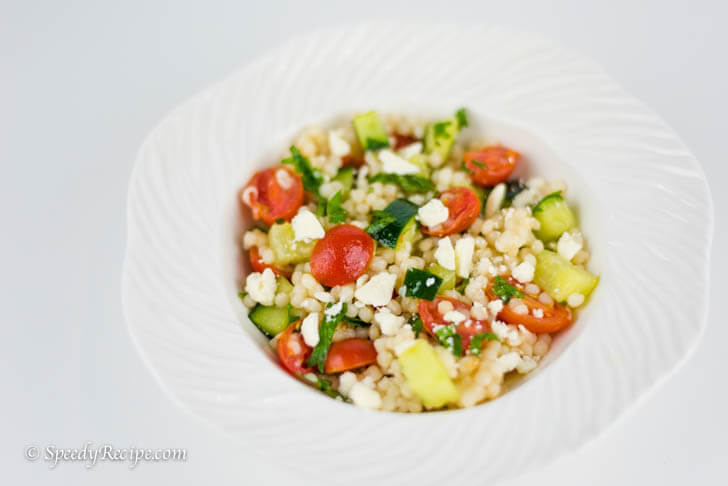
I keep this recipe on rotation because it’s fast. You can prep everything in under 30 minutes and still get something that tastes like it took effort. It pairs well with grilled lamb, roasted chicken, or just toasted flatbread. In warm months, it’s my go-to for those nights when I don’t want to spend much time near the stove.
This version leans into fresh herbs and a clean lemon bite. I also chose pearled couscous for its firmer chew and how it holds shape. You’ll notice the feta doesn’t just sit in the mix, it blends in and clings to everything, giving tiny hits of saltiness all over the bowl.
What is Couscous Salad?
Couscous salad is a cold or room-temperature dish built around couscous grains, chopped vegetables, herbs, and a sharp dressing. The term “couscous” comes from the Berber word “kuskus” which refers to pounding. Couscous itself is made from semolina that’s rolled into tiny granules and steamed or boiled.
This salad is popular in North African and Mediterranean regions. In some countries, couscous is even used as a breakfast base with dried fruits and yogurt, but in salads, it’s all about fresh ingredients. Pearled couscous (also called Israeli couscous) is often used in Western-style salads because it has a soft bite, almost like small pasta pearls. That said, traditional couscous is finer and fluffs up differently, best used in warm dishes or with tagine.
There’s also an old belief that couscous must be steamed by hand in a couscoussier to get the proper consistency. In homes, though, most people boil it, just like pasta. I think a lot of people just lean into what’s fast and gets dinner on the table. Another common question is if couscous is a grain or a pasta. It’s actually pasta, but it behaves like a grain in most dishes, which adds to the confusion.
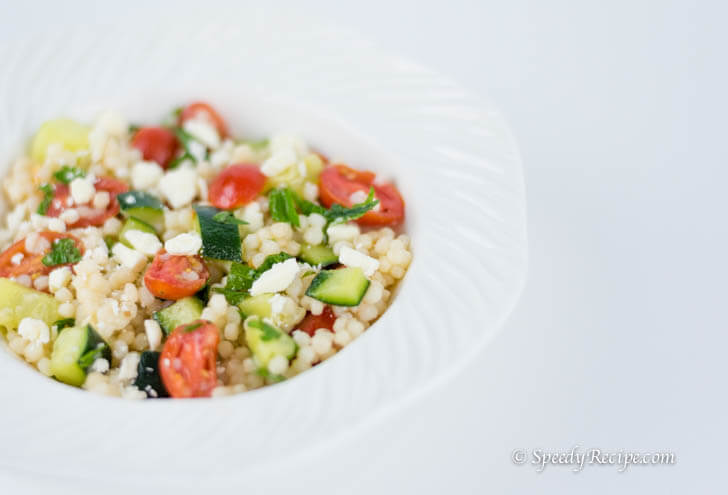
Ingredients of Couscous Salad
- Pearled couscous (6 ounces)
This is the base ingredient. Pearled couscous gives a soft but springy bite and keeps its shape well in cold salads. - Water (2 ½ cups)
Used for boiling the couscous. Stick with this amount to cook it through without over-softening the grains. - Salt (½ teaspoon)
Added to the water during boiling. It’s the first chance to season the couscous directly. - Olive oil (2 tablespoons)
Helps prevent the couscous from sticking. It also adds a smooth, clean layer of fat that carries the herbs and lemon juice well. - Grape tomatoes (15 pieces, sliced in half)
Adds color and a mild sweetness. You can use cherry tomatoes if they’re easier to find. - Mint (¼ cup, chopped)
This herb gives a cooling lift that cuts through the cheese and oil. Use fresh only—dried mint won’t give the same clarity. - Flat-leaf parsley (¼ cup, chopped)
Adds an earthy note and more green freshness. Curly parsley works in a pinch but has a rougher texture and stronger taste. - Feta cheese (1 cup, crumbled)
This adds sharpness and salt to the salad. Crumble it by hand or use the pre-crumbled kind for convenience. - Cucumber (1 medium, cut into small cubes)
Keeps the dish crisp and juicy. I prefer to peel it for a cleaner bite, but it’s optional. - Lemon juice (from ½ lemon)
Adds acid that brightens everything. You can add more to taste, but start with this amount to keep it balanced.
What You’ll Notice in Speedy Recipe’s Couscous Salad
Most couscous salad recipes online tend to lean heavily on vinaigrettes or skip herbs entirely. Some even load up on too many chopped vegetables, which turns the mix soggy by the next day. This version keeps it clean and focused, with just enough lemon juice to coat, not drown, the ingredients.
We also use pearled couscous, not the finer kind, because it holds firm and gives a more satisfying bite. You’ll notice the tomatoes and cucumber are added in just the right ratio to keep things juicy but not watery.
Traditional couscous salads, especially those from North Africa, often include spices like cumin or cinnamon and sometimes dried fruit. I skipped that here. This one’s sharper, greener, and more direct, meant to be a quick side or light main, not a spice-heavy dish.
The feta used here doesn’t overpower. It melts slightly into the warm couscous and blends with the oil and herbs instead of sitting on top as a garnish.
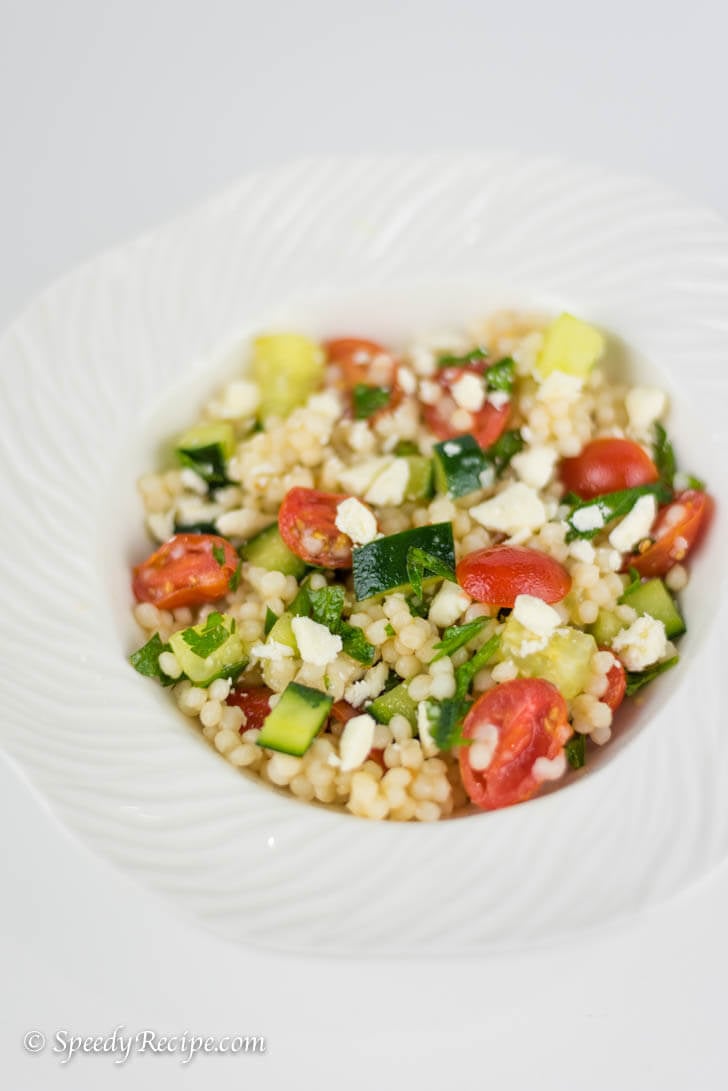
How to Cook Couscous Salad
- Boil the couscous properly – Bring 2 ½ cups of water to a boil in a medium pot. Add ½ teaspoon salt and 2 tablespoons of olive oil. Stir in the 6 ounces of pearled couscous, lower the heat slightly, and cook uncovered for about 10 to 12 minutes or until most of the water is absorbed. Drain off any extra water, then set the couscous aside to cool completely.
- Chop your fresh mix-ins – While the couscous cools, prep the vegetables and herbs. Slice 15 grape tomatoes in half and dice 1 medium cucumber into small cubes. Finely chop ¼ cup mint and ¼ cup flat-leaf parsley. Set everything in a large mixing bowl.
- Add lemon juice for brightness – Squeeze the juice of half a lemon directly into the bowl with the herbs and vegetables. This gives the salad its bright note and ties the cucumber, mint, and tomato together. Toss gently with a spoon to coat the mix before the couscous goes in.
- Combine with the couscous – Once the couscous has cooled to room temperature, add it into the bowl. Use a fork or spoon to break up any clumps before mixing. Add everything in slowly so the salad stays fluffy. Gently toss until the herbs and lemon coat the couscous evenly.
- Crumble in the feta cheese – Add 1 cup of crumbled feta into the bowl. You can crumble it by hand or use the pre-packaged kind. Fold it in gently, don’t overmix or it’ll disappear into the couscous. Let the feta stay in small pieces for salty bursts in every bite.
- Chill if you have time – You can serve the salad right away, but chilling it for 30 minutes lets the flavors blend better. Just cover the bowl and keep it in the fridge. If you’re prepping it ahead, save a bit of mint to add just before serving so it stays vibrant.
- Give it a last taste check – Before serving, give the salad a final toss and taste. If it needs more acid, add another squeeze of lemon. If it tastes flat, a tiny pinch of salt can help. Serve it in a wide bowl or plate for easy scooping.
What to Have with Couscous Salad
I usually enjoy couscous salad chilled with something smoky or meaty on the side, like this grilled pork belly. The lemon, herbs, and feta already give it some edge, so it doesn’t need much to round out a plate. This dish also works well as a packed lunch, I’ve had it with cold roast chicken or even canned tuna stirred in.
- Grilled Chicken Kebab – The smokiness of grilled chicken kebabs pairs well with the clean, herby base of couscous salad. It adds protein without clashing with the mint and lemon.
- Tzatziki Sauce – This yogurt-based dip adds a creamy contrast. Serve it on the side or spoon some right over the salad for extra coolness.
- Flatbread – Soft, warm flatbread helps scoop up the couscous and keeps the meal casual and easy. You can toast store-bought versions too, if short on time.
- Lamb Chops – If you want something richer, lamb chops work well. The saltiness of the feta and lemon in the couscous helps cut through the meat’s fat. Or if you just ate a savory meal such as this adobo.
- Stuffed Bell Peppers – For a lighter meal, stuffed peppers filled with spiced rice or minced meat hold up beautifully next to a couscous salad. They share similar ingredients but offer more body. There’s a Filipino version of this that swaps the bell peppers with green chili peppers. It’s called Dynamite because of the flavor explosion and spiciness.
Pairing couscous salad with any of the above keeps the meal fresh, filling, and not too heavy. I usually serve it as a side at dinner, but it works just as well for lunch or even a simple picnic. Eating outdoors or prepping a fast lunch for the week? Couscous salad hits the mark. It’s bright, clean, and doesn’t rely on fancy techniques or hard-to-find ingredients. Just solid, fresh parts that hold up well together.
Couscous Salad (with Tomato, Cucumber, Feta, and Mint)
Ingredients
- 6 ounces pearled couscous
- 2 ½ cups water
- ½ teaspoon salt
- 2 tablespoons olive oil
- 15 pieces grape tomato, sliced in half
- ¼ cup mint, chopped
- ¼ cup flat leaf parsley, chopped
- 1 cup crumbled Feta cheese
- 1 medium cucumber, cut into small cubes
- Juice from ½ lemon
Instructions
- Prepare the couscous by boiling the water. Add salt and olive oil. Put the couscous in the pot and then cook for 10 to 12 minutes or until the water is absorbed. Drain the excess water. Let it cool down.6 ounces pearled couscous, ½ teaspoon salt, 2 tablespoons olive oil, 2 ½ cups water
- Combine tomato, cucumber, parsley, mint, and lemon juice in a bowl. Toss to mix.15 pieces grape tomato, ¼ cup mint, ¼ cup flat leaf parsley, 1 medium cucumber, Juice from ½ lemon
- Add the couscous and Feta. Toss.1 cup crumbled Feta cheese
- Transfer to a plate or bowl. Serve.
Recipe Notes
- Let the couscous cool fully before mixing. If you add herbs or cheese while the couscous is still warm, the mint will wilt and the feta will melt into the mix. Cool it down completely for best results. You can speed this up by spreading it on a tray.
- Prep ahead, but dress last-minute if needed. If storing overnight, keep the lemon juice separate and mix it in just before serving. This keeps the salad from getting watery and the cucumber from softening.
- Go for quality feta. Skip the low-fat or pre-crumbled packs if you can. Block feta stored in brine has better flavor and a creamier bite.




Leave a Reply