
Chicken arroz caldo is one of the most loved comfort dishes in the Philippines, especially on rainy days or chilly mornings. You’ll find it at roadside eateries, airport lounges, family kitchens, and even hospital food trays, it’s that embedded in everyday Filipino life. Most people eat it hot from the pot, garnished with scallions, fried garlic, and a generous squeeze of calamansi or lemon.
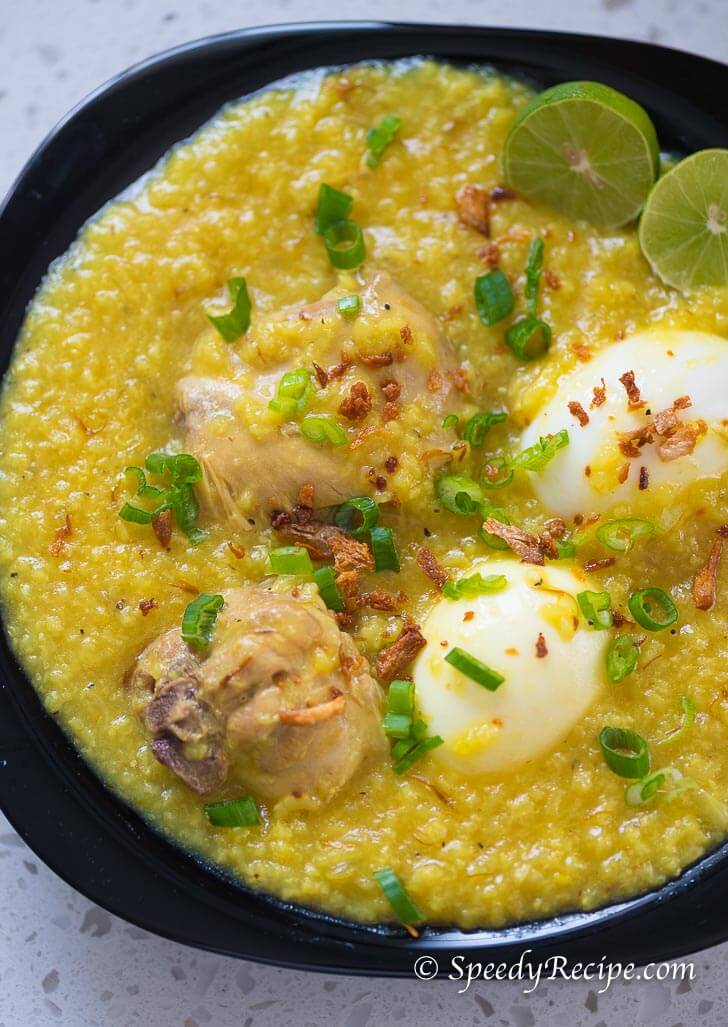
I’ve always turned to this recipe when I want something warm that doesn’t take hours to cook. It’s especially good with a side of tokwa’t baboy or simple hard-boiled eggs. Lugaw, champorado, and arroz caldo often share the same table for breakfast in many households, and this version fits right in with those comforting go-to meals. From stove to table, it’s ready in under an hour, and it feeds a crowd with very little effort.
What I like about this specific version is how it uses both safflower and a touch of saffron, giving the porridge its signature yellow hue and extra depth. It also uses jasmine rice instead of sticky rice, which I find easier to control for consistency. The pre-boiled eggs added at the end round it out nicely without requiring a separate dish.
What is Chicken Arroz Caldo?
Chicken arroz caldo is a Filipino rice porridge simmered with chicken, ginger, and garlic. The name comes from the Spanish words “arroz” (rice) and “caldo” (broth), though the dish itself is fully Filipino in flavor and technique. It’s closer to Chinese congee than Spanish soup, shaped by centuries of cultural blending.
In the Philippines, people eat arroz caldo for breakfast, lunch, or as a merienda between meals. It’s comfort food without needing hours in the kitchen.
What’s interesting is that safflower (called kasubha locally) is the go-to coloring agent instead of turmeric or annatto, and it’s mostly grown in Northern Luzon. There’s also debate over jasmine versus glutinous rice. Well, each region has its preference. Some families also drop in chicken livers or even hard-cooked eggs with slightly jammy yolks. And for some, the boiled egg is optional, but others swear it’s non-negotiable.
When a Filipino is under the table, chicken arroz caldo is their “Filipino penicillin.” You’ll also notice that every home tweaks the ratio of broth to rice depending on how thick they want it—some go loose and soupy, while others let it thicken until it can be eaten with a fork.
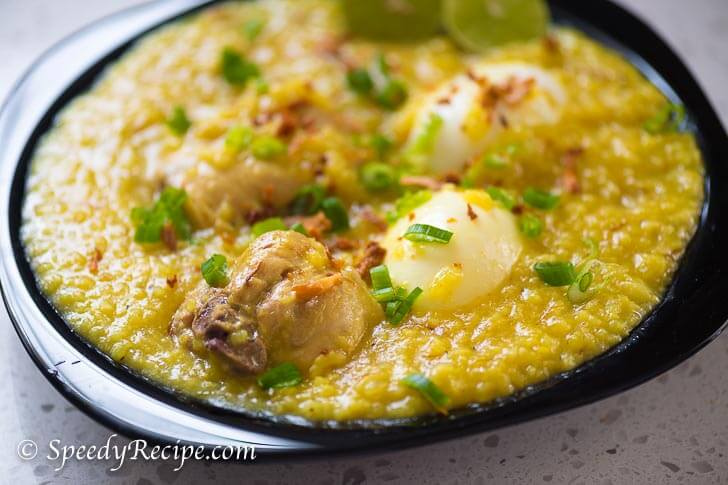
Ingredients of Chicken Arroz Caldo
Main Ingredients
- Chicken (1 lb., cut into serving pieces)
Adds richness and body to the porridge. Use bone-in cuts like thighs or drumsticks for better flavor. - Jasmine rice (1 ½ cups)
Gives the dish a creamy, soft base. It absorbs broth well without turning too sticky. - Chicken broth (6 to 7 cups)
Forms the liquid base of the dish. Homemade or store-bought both work, just stick with low-sodium if possible.
Aromatics and Base Flavor
- Ginger (3 thumbs, sliced into thin strips)
Warms up the whole dish and pairs perfectly with chicken. Slicing it thin lets it melt into the broth. - Garlic (1 head, crushed and chopped)
Used twice – once sautéed into the base, and again fried until golden for topping. - Yellow onion (1 large, chopped)
Adds sweetness and softens into the broth. It also helps round out the garlic and ginger combo. - Ground black pepper (¼ teaspoon)
Adds a light heat to the porridge. You can always adjust later when tasting. - Fish sauce (3 tablespoons)
Salty and rich, this is what brings the dish together. Add gradually if your broth is already seasoned.
Color and Toppings
- Safflower / Kasubha (3 tablespoons)
Adds yellow tint and a light herbal note. Steep in warm water if you want to draw out more color. - Saffron (¼ teaspoon, optional)
Optional for extra color and aroma. A pinch is enough. - Boiled eggs (5, peeled)
Sliced or halved on top. I prep these while the porridge simmers. - Green onions (1 bunch, chopped)
Goes on last for a fresh bite and contrast. Always add after turning off the heat. - Cooking oil (3 tablespoons)
Used at the start for sautéing and to fry the garlic topping. Neutral oils like canola or corn work well.
What You’ll Notice in Speedy Recipe’s Chicken Arroz Caldo
Most arroz caldo recipes online follow a basic template: chicken, garlic, ginger, rice, and broth. But many skip small steps that really improve the outcome. For example, some versions don’t separate the garlic for topping, which cuts down on that nice contrast of crispy vs. soft. Others don’t mention jasmine rice specifically, even though it plays a big part in getting the right consistency without turning too sticky or dry.
This version also avoids shortcuts like tossing everything in at once. It builds flavor layer by layer, first browning garlic, then simmering aromatics with the chicken before adding broth. Some recipes use plain water or dilute broths, but this one leans into rich chicken stock, with the option to go homemade or instant.
Compared to traditional arroz caldo, which can be more loose or even watery, this version leans just slightly thicker and heartier. It’s less about how much liquid you add and more about watching the rice as it cooks, adjusting slowly. The addition of both safflower and saffron sets it apart in both color and aroma.
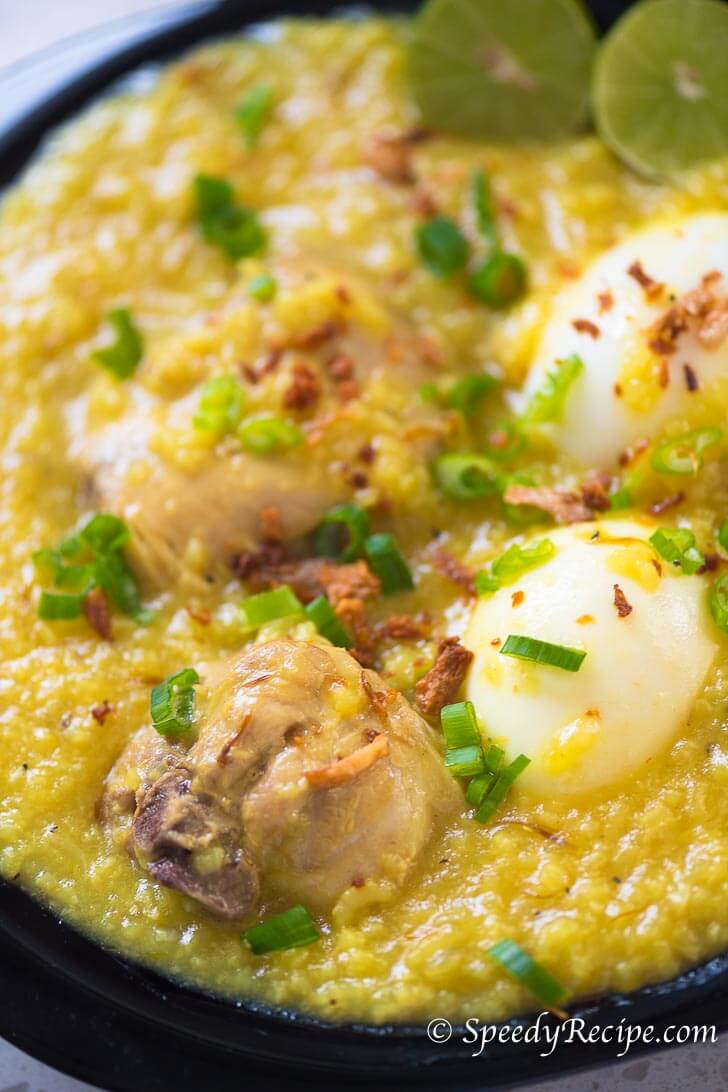
How to Cook Chicken Arroz Caldo
- Start by heating your base – Pour 3 tablespoons of cooking oil into a pot and turn the heat to medium. Add the chopped garlic right away and stir frequently. Let it cook until golden brown, then scoop it out and set aside, this will be your crispy topping. Keep the oil in the pot to build the next layers of flavor.
- Build the flavor with aromatic – In the same pot, add the sliced ginger, chopped onion, and ground black pepper. Stir and cook for about 3 to 4 minutes, or until the onions turn soft and fragrant. This mixture will form the backbone of your broth. Don’t rush this part, let it cook through gently.
- Brown the chicken pieces – Add the chicken to the pot and let each side cook until lightly browned. This step locks in the flavor before simmering. Stir occasionally to prevent sticking. Browning helps bring out that deep chicken flavor in the final broth.
- Stir in the rice – Add the rinsed jasmine rice into the pot. Mix it well with the chicken and aromatics. Let it cook for about 2 minutes, giving it time to toast lightly in the pot. This pre-cooking helps the rice absorb more flavor once the broth goes in.
- Add broth and simmer – Pour in 6 to 7 cups of chicken broth, then raise the heat and bring it to a boil. Once it starts boiling, lower the heat to medium, cover the pot, and simmer for about 35 minutes. Stir every 10 minutes or so to keep the rice from sticking at the bottom.
- Add safflower and saffron – Once the rice has softened and the porridge thickens, stir in the safflower and saffron. Cook uncovered for another 5 minutes. If the porridge looks too thick, splash in more broth or hot water. You’re aiming for a spoonable consistency, not too runny, not too dry.
- Finish with seasonings and toppings – Add 3 tablespoons of fish sauce and give everything a final stir. Let it cook for 2 more minutes so the flavors blend. Serve in bowls, top with a boiled egg, and sprinkle with green onions and the fried garlic. A quick squeeze of lemon or calamansi finishes it perfectly.
What to Have with Chicken Arroz Caldo
I usually eat chicken arroz caldo as a midday meal when I want something warm but not too heavy. It’s even better with something crispy or tangy on the side to contrast the soft porridge. A squeeze of calamansi or lemon is non-negotiable in my kitchen, it sharpens everything in the bowl.
- Tokwa’t Baboy – This dish of crispy tofu and sliced pork in soy-vinegar sauce is one of arroz caldo’s oldest companions. The tangy dressing cuts right through the richness of the porridge. The textures play well too, soft rice paired with chewy pork and crunchy tofu. Try this special tokwa’t baboy recipe.
- Lumpiang Togue – These fried vegetable spring rolls are loaded with mung bean sprouts and carrots. Dip them in vinegar or banana ketchup for contrast. They give a satisfying crunch between bites of soft rice.
- Tofu and Baby Bok Choy with Oyster Sauce – This sautéed recipe combines crispy tofu and crunchy bok choy. It pairs well with arroz caldo because the saltiness and crunch add contrast to the soft, mild porridge.
When you pair chicken arroz caldo with anything crispy, vinegary, or salty, it rounds out the whole dish. I’ve eaten it for breakfast with coffee, for lunch with iced tea, and for dinner with a side of fried fish. It adapts to every time of day, and that’s part of why it’s stuck around for so long.
Chicken Arroz Caldo Recipe
Ingredients
- 1 lb. chicken, cut into serving pieces
- 1 ½ cups Jasmine rice,
- 6 to 7 cups chicken broth,
- 3 thumbs ginger, sliced into thin strips
- 1 head garlic, crushed, chopped
- 1 large yellow onion, chopped
- 3 tablespoons safflower, kasubha
- ¼ teaspoon saffron, optional
- 1 bunch green onions, chopped
- 5 boiled eggs
- 3 tablespoons fish sauce
- ¼ teaspoon ground black pepper
- 3 tablespoons cooking oil
Instructions
- Heat the oil in a pot.3 tablespoons cooking oil
- Add the garlic right away. Stir and continue to cook the garlic in medium heat until it gets golden brown. Scoop the garlic out of the pot and then set aside.1 head garlic
- Add ginger, onion, and ground black pepper into the pot. Cook until the onion becomes tender.3 thumbs ginger, ¼ teaspoon ground black pepper, 1 large yellow onion
- Put the chicken slices into the pot. Cook until the chicken turns light brown.1 lb. chicken
- Pour the rice into the pot and then stir. Cook for 2 minutes.1 ½ cups Jasmine rice
- Pour the chicken broth into the pot. Let boil.6 to 7 cups chicken broth
- Cover the pot and set the heat to medium. Continue to cook for 35 minutes while stirring once in awhile.
- Add the safflower (kasubha) and saffron. Stir. Cook for 5 minutes or until a porridge-like texture is achieved; you can add more chicken broth or water if needed.3 tablespoons safflower, ¼ teaspoon saffron
- Stir-in the fish sauce. Continue to cook for 2 minutes more.3 tablespoons fish sauce
- Transfer to as bowl. Add the boiled egg and then top with fried garlic and green onions. Squeeze lemon on top. Enjoy!5 boiled eggs, 1 bunch green onions
Recipe Notes
- Choose your rice wisely. Jasmine rice gives the creamiest consistency without getting too sticky. Glutinous rice is also used in some households, but it cooks faster and thickens more aggressively, so adjust liquid levels if swapping.
- Use bone-in chicken for better results. Chicken thighs or drumsticks still attached to the bone add a fuller flavor during the simmer. Remove the meat and shred it if you prefer boneless serving pieces later on.
- Don’t skip the fried garlic. That crispy garlic topping isn’t just for show, it adds real contrast in taste and texture. I usually fry the garlic at the beginning and leave it uncovered to stay crisp until serving.
- Safflower is not the same as saffron. Safflower (kasubha) is used mostly for its yellow tint and is common in Filipino home kitchens for coloring rice-based dishes like arroz caldo. It has little to no flavor. Saffron, on the other hand, carries a distinct earthy scent with subtle bitterness and is used sparingly in dishes like Spanish paella, Persian tahdig, or Indian biryani.
- Adjust your broth as you go. The rice will keep soaking up liquid as it sits. Add more hot broth or water gradually during cooking, especially if you’re after a looser, spoonable consistency.





Leave a Reply