
Parmesan crusted tilapia is my answer to a slow grocery week. The fillets are usually in my freezer, and the crust comes from things I already keep on hand: Parmesan, garlic powder, and breadcrumbs. I reach for it when I want fish on the table fast without much cleanup.
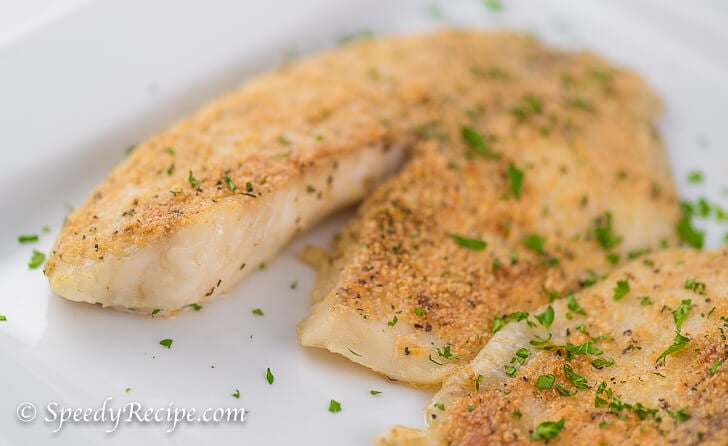
This version keeps the topping thin so it crisps in the oven instead of going soft. I press the cheese mixture onto both sides, not just the top, so every bite has crust. If you want a more garlicky version, my baked tilapia with a crispy parmesan garlic crust uses the same method with extra garlic.
Think of it as a homemade take on the parmesan crusted tilapia people grab at Costco or Sam’s Club, for less money, and it cooks fast.
What Is Parmesan Crusted Tilapia?
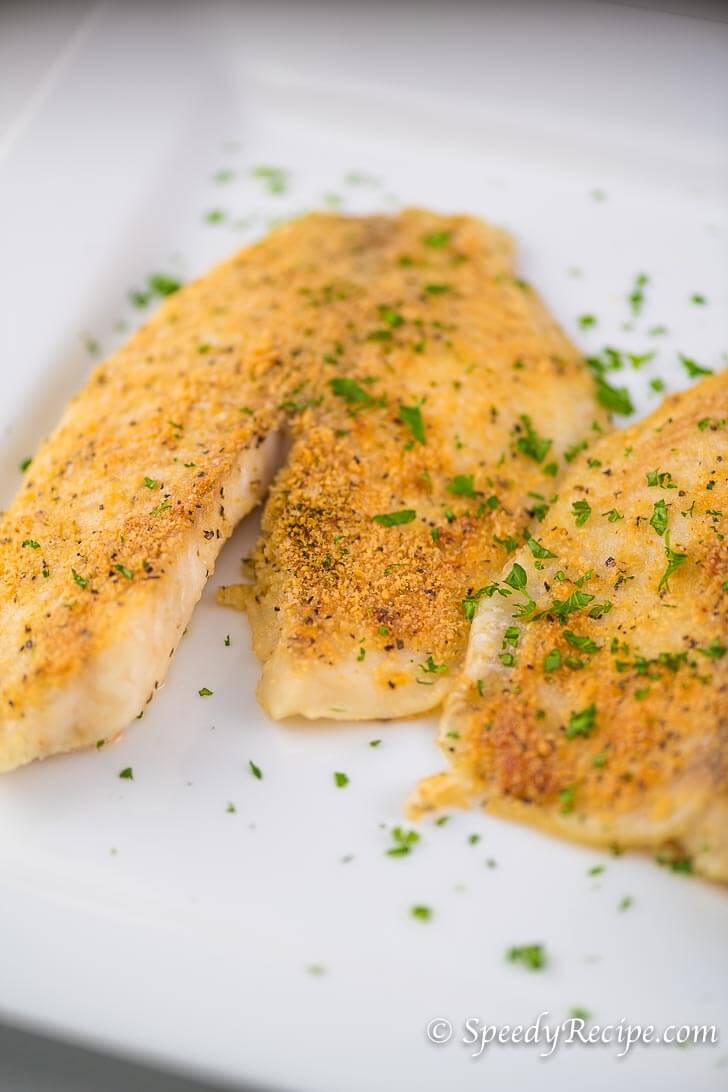
Parmesan crusted tilapia is baked fish: tilapia fillets pressed into grated Parmesan, breadcrumbs, and seasoning, then baked until the topping sets and browns. Crusted means coated, not deep fried, so it stays thin and does not feel like fried breading. The mild fish lets the cheese and garlic come through. For a spiced version instead of a cheesy one, try my oven baked blackened tilapia.
Ingredients
- Tilapia fillets – Tilapia is thin and mild, so it bakes quickly and works well with the cheese crust. Fresh or thawed frozen both work, but pat them very dry first. Cod, haddock, or flounder can stand in.
- Parmesan cheese – Grated Parmesan melts into the topping and browns in the oven. It packs on more evenly than large shreds, and the canister Parmesan works fine here.
- Italian breadcrumbs – They help the cheese mixture hold together and give it crunch. Swap in panko for a coarser, crispier topping, or use plain breadcrumbs with a pinch of dried herbs.
- Garlic powder – Seasons the crust evenly without scorching the way fresh garlic can in a hot oven.
- Olive oil – Helps the breadcrumb mixture stick and brown in the oven. A thin spread of mayonnaise works as a binder too if you want a deeper color.
- Fine sea salt and black pepper – Season the fish itself so it has flavor, not just the topping.
Want a lighter finish instead of a cheese crust? My baked lemon butter tilapia uses the same fillets with lemon and butter.
How to Cook Parmesan Crusted Tilapia
Prep the Fillets
Dry fish is the whole game. Extra water steams the crust and keeps it from sticking, which is the main reason the topping turns soft.
- Preheat the oven to 400°F. Line a baking tray with foil or parchment and grease it lightly.
- Pat the tilapia fillets dry with paper towels on both sides.
- If you are starting from frozen, thaw the fillets fully and blot them dry before going further.
Mix and Coat
Pressing the Parmesan mixture onto both sides is what gets some crust on the bottom too, not just the top. Mixing it first keeps it even.
- Combine the Parmesan, garlic powder, black pepper, sea salt, and Italian breadcrumbs in a shallow bowl. Mix until even.
- Rub olive oil over both sides of each fillet.
- Press each fillet into the Parmesan mixture, coating both sides. Press gently so the crust holds while it bakes.
Bake the Tilapia
Tilapia is thin and cooks fast. The topping sets in about the same time the fish turns flaky, so it does not need much time in the oven.
- Arrange the coated fillets on the tray with space between them.
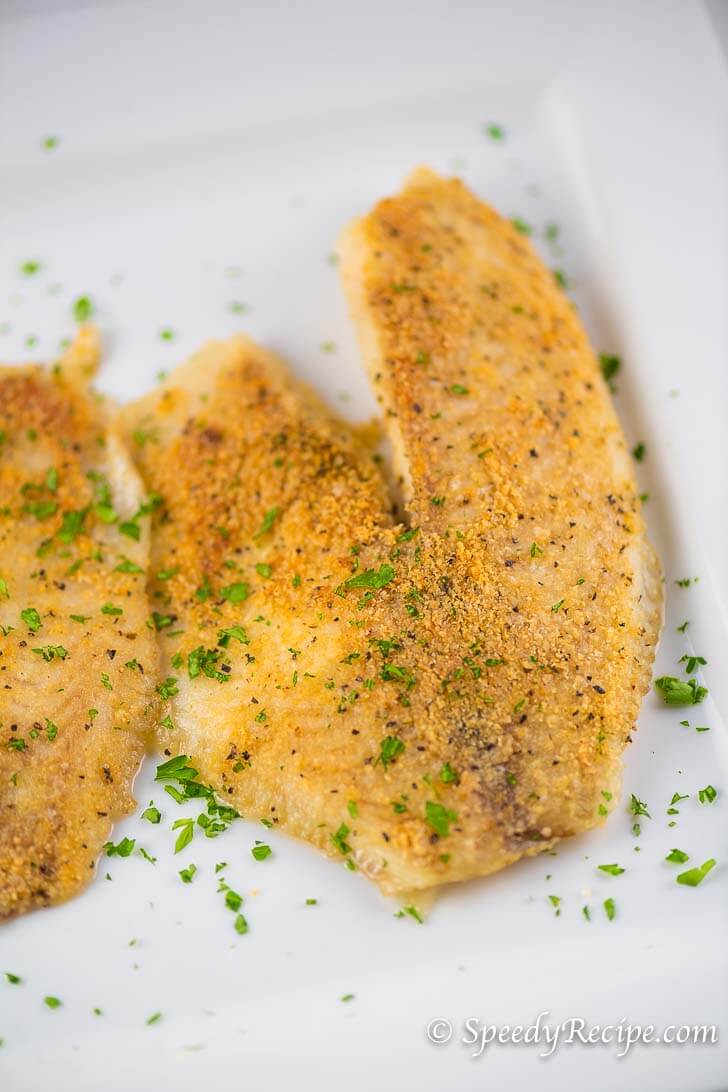
- Bake for 12 to 15 minutes, until the crust is golden and the fish flakes easily with a fork.
- For a deeper brown, run the broiler for the last one to two minutes and watch it closely.
An instant read thermometer should read 145°F at the thickest part. Let the fish rest two minutes before lifting it off the tray so the crust sets.
Tips
- Use grated, not shredded – Fine grated Parmesan packs onto the fish and browns evenly, while long shreds tend to slide off.
- Try a mayo binder – A thin layer of mayonnaise in place of the oil helps the crust cling and brown a little deeper.
- Add panko for crunch – Swapping half the breadcrumbs for panko gives a coarser, crispier coating.
- Skip the wire rack – Bake straight on the greased tray. A rack tends to pull the crust off when you lift the fish.
- Do not crowd the tray – Leave room between fillets so the tops brown instead of steaming each other.
What to Serve with Parmesan Crusted Tilapia
- Easy Cucumber Salad – The cool, slightly sweet crunch cuts through the richness of the cheese crust.
- Bacon and Egg Fried Rice with Peas and Carrots – A savory rice base makes the fish more filling.
- Crispy Tofu and Baby Bok Choy with Oyster Sauce – A green vegetable side that keeps the plate from being all fish and rice.
- Steamed rice – Plain rice soaks up any juices and works with the mild fish.
Storage and Reheating
Store leftovers in an airtight container in the fridge for up to three days. The crust softens once chilled. Reheat in a 350°F oven or an air fryer to bring back some crispness; the microwave works but leaves the coating soft. Cooled fillets freeze for up to two months.
More Fish Recipes
- Sweet and Sour Fish – Good when you want fish with sauce instead of a baked crust.
- Baked Ginger Glazed Mahi-mahi – A firmer fillet with a sweet ginger glaze that bakes with little work.
- Garlic Butter Shrimp – A fast seafood option that is done in under fifteen minutes.
- Bacon Wrapped Shrimp with Cream Cheese Stuffing – Good for parties, or when you want something richer than plain fish fillets.
Frequently Asked Questions
How long do you bake parmesan crusted tilapia?
About 12 to 15 minutes at 400°F. The fish is done when it flakes easily with a fork and reaches 145°F at the thickest part. Thin fillets can finish closer to 10 minutes, so check early.
Can I use frozen tilapia?
Yes, but thaw it fully first. Frozen fillets release water as they cook, which makes the crust soggy. Thaw overnight in the fridge, then pat the fish very dry before coating.
Can I make parmesan crusted tilapia in the air fryer?
Yes. Coat the fillets the same way and air fry at 400°F for about 8 to 10 minutes, until golden and flaky. Cook in a single layer so the crust crisps evenly.
Why isn’t my crust crispy?
Crusted means coated, so it crisps but will not be crunchy like deep fried fish. For more crunch, dry the fish well, swap in panko, and run the broiler for a minute at the end.
What other fish can I use?
Any mild, firm white fish works. Cod, haddock, flounder, and sole all work with this crust. Just add a minute or two if the fillets are thicker than tilapia.
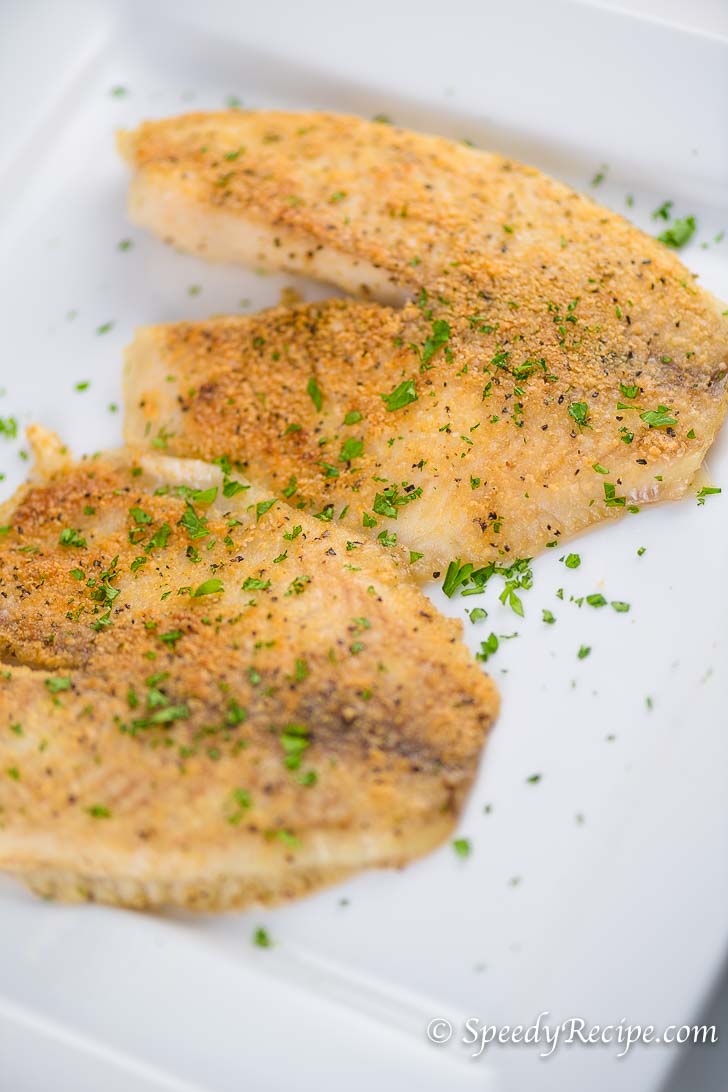
If you make this parmesan crusted tilapia, leave a comment and tell me if you used breadcrumbs, panko, or the mayo binder.
Parmesan Crusted Tilapia
Ingredients
Fish
- 2 pieces tilapia fillets, patted very dry
- 2 tablespoons olive oil
Crust
- 1/2 cup grated Parmesan cheese
- 1 teaspoon garlic powder
- 1/4 teaspoon ground black pepper
- 1/2 teaspoon fine sea salt
- 1/4 cup Italian breadcrumbs
Instructions
- Preheat the oven to 400°F. Line a baking tray with foil or parchment paper and lightly grease it.
- Pat the tilapia fillets dry on both sides with paper towels. This helps the crust stick and keeps the fish from steaming in the oven. If you are starting from frozen, thaw the fillets fully and blot them dry first.2 pieces tilapia fillets
- In a shallow bowl, combine the grated Parmesan cheese, garlic powder, ground black pepper, sea salt, and Italian breadcrumbs. Mix until everything looks even.1/2 cup grated Parmesan cheese, 1 teaspoon garlic powder, 1/4 teaspoon ground black pepper, 1/2 teaspoon fine sea salt, 1/4 cup Italian breadcrumbs
- Rub olive oil all over both sides of each tilapia fillet.2 tablespoons olive oil
- Press each fillet into the Parmesan mixture, coating both sides well. Press the mixture gently into the fish so it stays in place while baking.2 pieces tilapia fillets, 1/2 cup grated Parmesan cheese
- Arrange the coated tilapia on the prepared baking tray, leaving a little space between the pieces.
- Bake for 12 to 15 minutes, or until the crust is golden and the fish flakes easily with a fork. For a deeper brown, run the broiler for the last 1 to 2 minutes and watch it closely.
- Let the fish rest for 2 minutes before moving it from the tray so the crust sets. Serve hot with rice, salad, roasted vegetables, or any simple side you already have.
Equipment
- 1 Baking Tray Lined with foil or parchment and lightly greased.
- 1 Shallow Bowl For mixing and coating the fillets in the crust.
- 1 Instant Read Thermometer To confirm the fish reaches 145°F at the thickest part.




Leave a Reply