
Every Filipino household seems to have its own way of doing pochero, and chicken is one of the most fuss-free versions you’ll find. In many homes across Luzon, you’ll see chicken pochero dish served at Sunday lunch or during smaller family get-togethers. It lands on the table warm and brothy, often paired with rice and fish sauce on the side, sometimes with a banana on the plate. There’s no single time to eat it – it shows up wherever there’s a need for comfort food that doesn’t take all afternoon to prep.
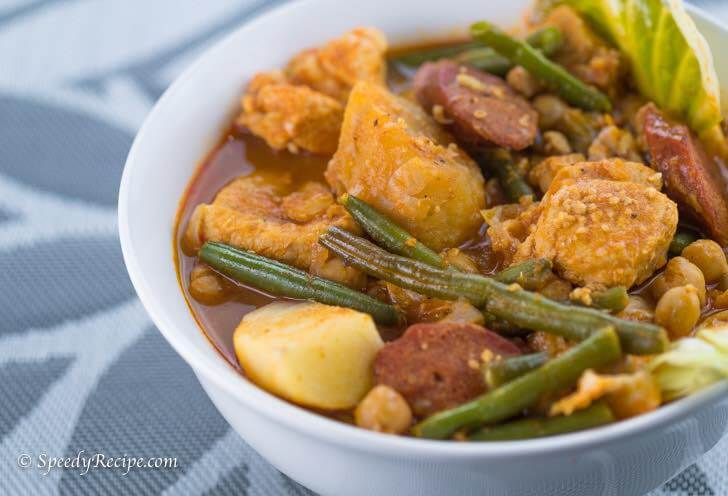
What pulls me toward this version is how quickly it comes together compared to the ones that use beef shank or pork hocks. It cooks in under an hour, and everything happens in one pot. You can even prep some of the components ahead of time. Pairing it with steamed white rice is a no-brainer, but I also enjoy mine with warm pandesal on the side to sop up the broth.
This version cuts down on bulk without sacrificing what makes pochero such a hit. It stays true to the classic combo of tomato sauce, chorizo, and saba bananas, while leaning on boneless chicken breasts to speed things up. The toasted garlic garnish? Optional, but worth adding for that extra layer.
What is Chicken Pochero?
Chicken pochero is a Filipino stew that makes use of chicken simmered in tomato sauce and vegetables, typically with saba bananas and cabbage. The name pochero (or puchero) comes from the Spanish word for stewpot, puchero, and traces back to colonial influences that brought European-style meat stews into Filipino kitchens. Over time, regional tweaks made it more vibrant and banana-sweet.
It’s a common comfort food in the Philippines because of how adaptable it is. It works with affordable ingredients and can be made in large batches. Non-Filipinos find it appealing because the flavors are both familiar and unexpected, tomato sauce and garlic are staples, but saba bananas add a pleasant surprise.
The pairing of chorizo de Bilbao with bananas might raise eyebrows, but there’s a reason it’s stuck around for so long. We love that smoky flavor paired with its sweetness. Additionally, saba bananas don’t just sweeten the broth – they soften and absorb the richness of the sauce. Some say this is a stew, but it has more in common with nilaga than with your standard Western-style stew.
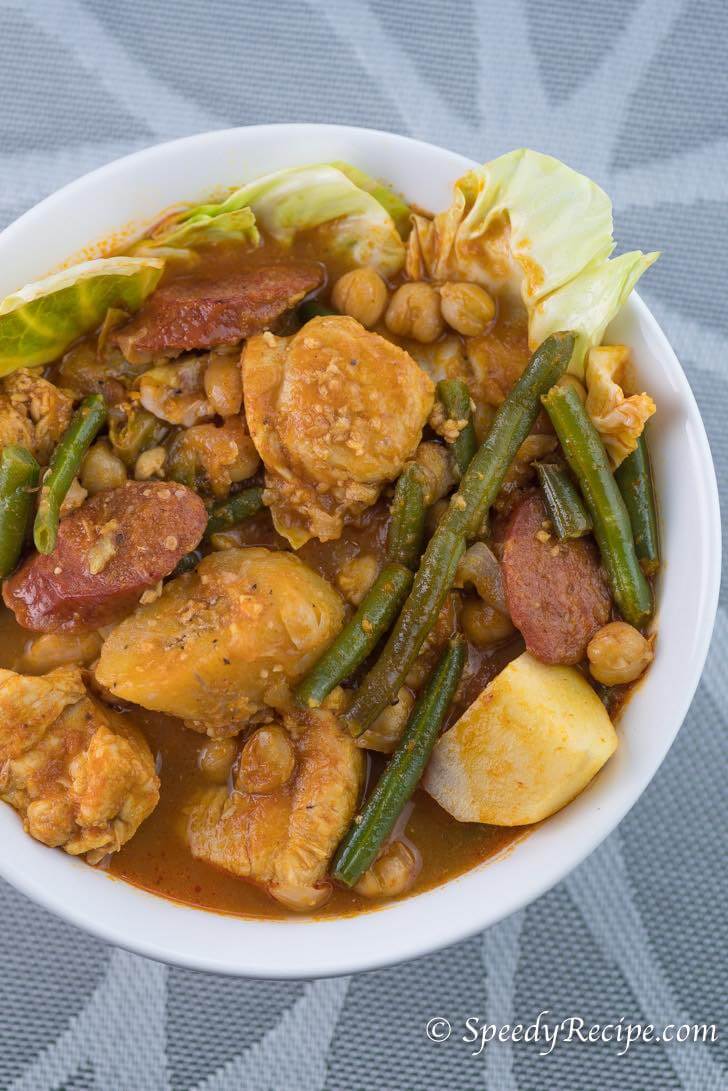
Ingredients of Chicken Pochero
Main Proteins
- Boneless chicken breasts (1 ½ lb.) – This is the main protein and cooks faster than bone-in cuts. Slice into large cubes so it stays juicy during simmering.
- Chorizo de Bilbao (2 pieces, sliced thinly crosswise) – Adds smokiness and richness to the broth. As it cooks, it releases seasoned oil that blends into the tomato sauce.
Vegetables
- Long green beans (3 ounces) – These go in last to stay crisp. Snapping them in half helps them fit better in the pot.
- Potato (1 medium, cubed) – Adds heartiness and absorbs flavor from the broth. Keep the cubes large so they don’t fall apart.
- Cabbage (½ small head, quartered) – Gives bulk and absorbs the stew’s flavor. Don’t slice it too thin or it will overcook quickly.
- Yellow onion (1 medium, chopped) – Builds flavor from the start when sautéed with garlic. Pick a fresh, firm onion for the best results.
- Garlic (3 cloves, crushed) – Adds a strong base flavor. Crushing instead of mincing keeps it from burning in the oil.
Sauces and Broth
- Tomato sauce (1 can, 8 oz.) – This forms the backbone of the stew’s broth. Choose a plain tomato sauce without added herbs.
- Chicken broth (1 ½ cups) – Helps the sauce thin out and keeps the stew from drying. Use low-sodium broth if you’re adjusting seasoning later.
Other Add-ins
- Saba bananas (2 ripe, sliced) – Their sweetness contrasts well with the savory broth. Make sure they’re just ripe, not overly soft.
- Chickpeas (1 can, 14 oz.) – These add bulk and soak up the tomato flavor. Drain them well before adding.
- Canola oil (3 tablespoons) – Used for sautéing. Neutral flavor keeps the spotlight on the chorizo and garlic.
- Salt and ground black pepper (to taste) – Add this at the end after the broth has reduced a bit. The chorizo already carries salt, so taste before seasoning.
- Toasted garlic (2 tablespoons, optional) – Adds crunch and aroma on top. I usually prep this in advance and sprinkle it before serving.
What You’ll Notice in Speedy Recipe’s Chicken Pochero
Most pochero recipes you’ll find online lean toward chunkier meats like pork belly or beef shank. Those cuts give a richer broth but stretch cooking time well over an hour. This version skips the wait by using boneless chicken breasts that soak in flavor fast and stay tender when not overcooked.
Another thing I changed is I cut back on the bulk. Some recipes throw in sweet potatoes, plantains, and bell peppers all at once. I kept it tighter with chickpeas, potatoes, and saba bananas to keep it from turning into a mixed-veg overload. That way, each element stands out.
The chorizo de Bilbao doesn’t just float on top, it cooks early with the chicken so it can season everything else as it simmers. You’ll also notice that I hold back the green beans until the end. They need barely 8 minutes in the broth, or they lose their color and snap.
Compared to the older, traditional version from provinces like Cavite or Batangas, this one feels lighter and quicker. The flavor still hits hard, but you don’t need to pull out bone-in meats or slow-simmer for hours. It’s a weekday version of a Sunday dish.
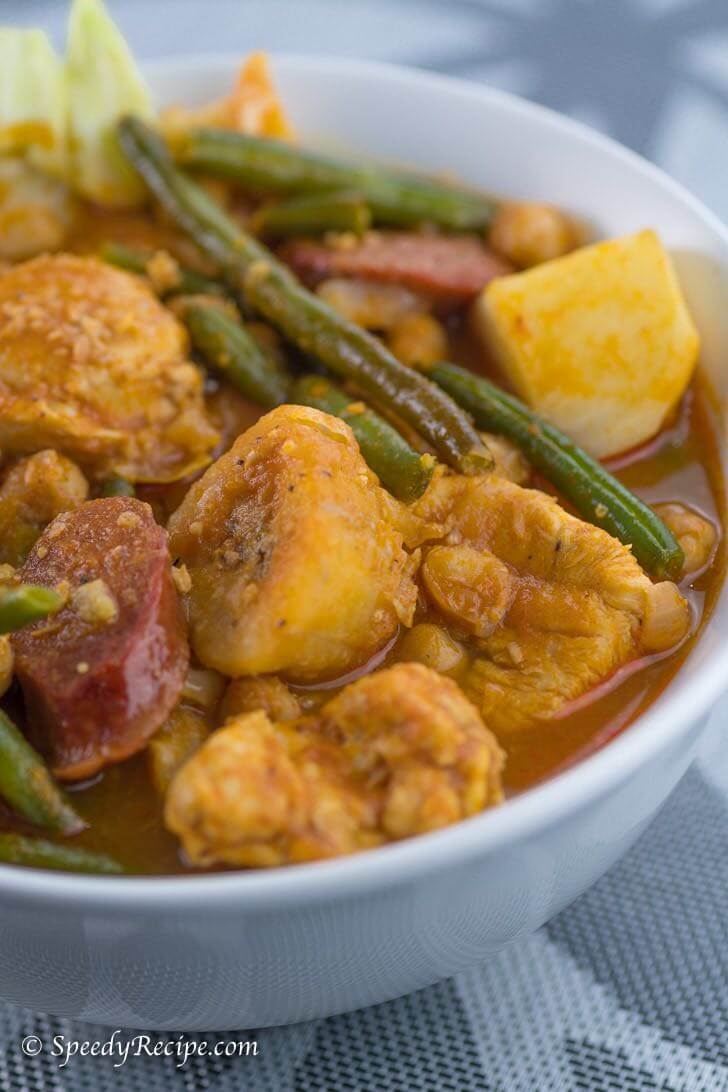
How to Cook Chicken Pochero
- Start with a Flavor Base – Heat 3 tablespoons of canola oil in a deep pot over medium heat. Add the crushed garlic and chopped onion. Cook them for 2 to 3 minutes until they soften and release their aroma. Stir often so the garlic doesn’t brown too quickly.
- Add the Meats – Toss in the cubed chicken breasts and sliced chorizo de Bilbao. Let them cook for about 2 minutes while stirring, just enough for the chicken to turn pale and for the chorizo to release its oils. That oil will flavor everything else. Keep the heat steady so nothing dries out.
- Pour in the Sauce – Pour in the tomato sauce and chicken broth. Stir well to combine. Cover the pot, bring it to a boil, then lower the heat and simmer for 25 minutes. This gives the chicken time to absorb the base flavors.
- Layer in the Heavier Vegetables – Add the cubed potato, sliced saba bananas, drained chickpeas, and quartered cabbage. Push the vegetables down gently so most of them are under the broth. Put the lid back on and cook for 7 minutes. You want the potatoes just tender, not falling apart.
- Finish with Green Beans and Seasoning – Uncover the pot and add the long green beans. Season with salt and black pepper to taste. Let it cook uncovered for 6 to 8 minutes so the beans stay crisp and vibrant. Stir once or twice to keep everything cooking evenly.
- Add Optional Garnish – If you like a little crunch, sprinkle toasted garlic on top before serving. It’s optional but adds a nice contrast. I usually make a small batch of toasted garlic while the stew simmers. It holds well for a couple of days if stored in a dry jar.
- Serve and Enjoy – Serve hot with a bowl of rice on the side. A little fish sauce or patis for dipping makes the meal more traditional. You’ll notice how the bananas, chorizo, and tomato broth work together in a way that’s both familiar and a little unexpected. It’s comfort food without being too heavy.
What to Have with Chicken Pochero
When I sit down with a bowl of chicken pochero, I go straight for warm white rice. That broth needs something to soak into, and rice is the classic match. A dash of patis or a squeeze of calamansi on the side gives it that finishing touch I grew up with
- Steamed White Rice – Rice isn’t just a filler here. It carries the broth, soaks in the chorizo oil, and stretches the meal easily. Filipinos rarely eat pochero without it, and you shouldn’t either.
- Fried Galunggong (Mackerel Scad) – Crispy fried galunggong adds a salty contrast to the stew. The fish cuts through the richness of the tomato broth and pairs well with the soft bananas and cabbage. It also gives you that crunch if you skipped the toasted garlic.
- Toyo with Calamansi and Chili – This dipping sauce is often served on the side. A spoonful of the stew with a dip into that salty-sour-spicy mix takes the flavor up a notch. It also gives the chicken and potato a little extra zing.
More Ways to Cook Pochero
Chicken pochero is just one variation. The main ingredient changes depending on the region or what’s available, and each version has its own character.
- Pata Pochero uses pork leg or hock. The meat is gelatinous and soft, and it cooks down into a broth that’s thicker and richer than the chicken version. If you like stews with more body and don’t mind a longer simmer, this one’s worth trying.
- Beef Pochero leans into beef shank, which means bone marrow and deep flavor. It takes longer to tenderize the meat, but the payoff is a broth that clings more to each ingredient. The banana and tomato combo still holds strong in this one.
- Beef and Tripe Pochero adds a chewy contrast thanks to the ox tripe. This one goes back to older Spanish-style versions where multiple cuts are stewed together. It’s closer to cocido in structure, but still very Filipino at heart.
Each of these recipes highlights how flexible pochero can be. You can use whatever protein you have on hand, keep the same base of tomato sauce and bananas, and still end up with something hearty and satisfying. Chicken pochero is my go-to when I want it fast, but I reach for the pork or beef versions when I’ve got a little more time to spend in the kitchen.
Chicken Pochero Recipe
Ingredients
- 1 ½ lb. boneless chicken breasts, cut into large cubes
- 2 pieces chorizo de bilbao, thinly sliced crosswise
- 3 ounces long green beans
- 1 14 oz. can chickpeas
- 1 medium potato, sliced into large cubes
- 2 ripe saba bananas, sliced
- 1 ½ cups chicken broth
- 1 8 oz. can tomato sauce
- 1 medium yellow onion, chopped
- ½ small cabbage, quartered
- 3 cloves garlic, crushed
- 2 tablespoons toasted garlic, optional
- 3 tablespoons canola oil
- Salt and ground black pepper to taste
Instructions
- Heat oil in a pot.3 tablespoons canola oil
- Sauté garlic and onion until soft.3 cloves garlic, 1 medium yellow onion
- Add the chicken and chorizo. Cook for 2 minutes.1 ½ lb. boneless chicken breasts, 2 pieces chorizo de bilbao
- Pour the tomato sauce and chicken broth. Let boil. Cover and then cook in medium heat for 25 minutes.1 8 oz. can tomato sauce, 1 ½ cups chicken broth
- Add the banana, chickpeas, cabbage, and potato. Cover and cook for 7 minutes.1 14 oz. can chickpeas, 2 ripe saba bananas, ½ small cabbage, 1 medium potato
- Put the long green beans into the pot. Add salt and pepper. Cook uncovered for 6 to 8 minutes.3 ounces long green beans, Salt and ground black pepper to taste
- Top with toasted garlic (this is optional). Serve.2 tablespoons toasted garlic
Recipe Notes
- Timing the Add-ins Matters. Don’t dump all the vegetables at once. Potatoes and bananas need more time than green beans, so follow the order to keep everything properly cooked without turning to mush.
- Watch the Chorizo Oil. When you add the chorizo to the pan, it will release reddish oil. This is normal and adds a lot of flavor to the dish. Just make sure it doesn’t burn.
- Use Ripe but Firm Saba Bananas. Overripe ones will fall apart during simmering and make the stew cloudy. If they’re too green, they’ll taste starchy instead of sweet.




Leave a Reply